
How a Missed Flight Led Us to Paradise
Our Goa chapter was supposed to end with champagne in Emirates Business Class (booked on points, of course). Instead, an unexpected international conflict grounded our flight through Dubai and rewrote our itinerary overnight. Five extra days, one overnight train, and an entirely new destination later, we discovered that Kerala wasn’t a consolation prize—it was one of the highlights of our journey.
If I am completely honest with you, I am so happy this happened (obviously not the war, but the trip disruption)! It tested my travel flexibility chops, lent a sense of excitement, extended this amazing trip, and allowed us to see yet another spectacular corner of India… a country that quickly became one of my favorites!
As I mentioned, we had booked business class flights on points on Emirates (see how you can too here) from Mumbai back to the US. When Trump attacked Iran, airspace over the Middle East was closed. There were retaliatory bombings in Dubai, and the airport was closed for a period of time. Even if it had opened, we would not have wanted to take the risk of flying through there.
To book a flight home from India on the same day we had planned to depart, it was going to cost $3000 each, one way, in coach. Award seats were nowhere to be found! I decided to get creative and look further afield… I started looking at hubs we could easily get to from India with airlines that didn’t fly through the Middle East… not as easy as you might think. Finally, I found seats in United Polaris Business class from Kuala Lumpur back home for under $2000 per person. I booked myself a seat on that flight.
We had already planned a trip to Vietnam shortly after we were to return from India. Vuong decided to go ahead and fly to Vietnam for $300, and meet up with his family there. I’d go home and work for a week, then head back to Vietnam. It was a lot, for sure… good thing I love to fly and spend time in airport lounges!
The Indian State of Kerala
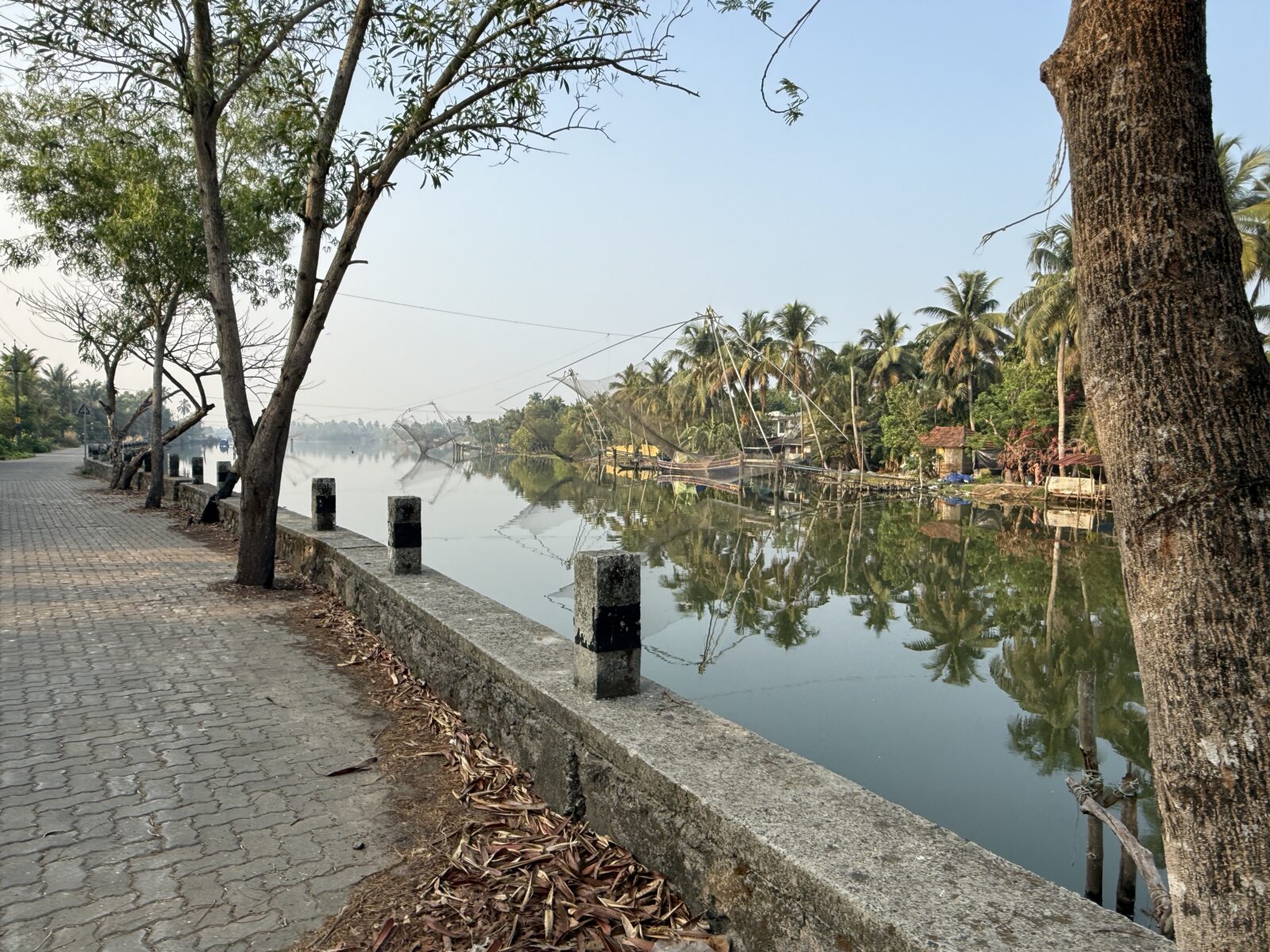
Tucked between the Arabian Sea and the lush Western Ghats in India’s far southwest, Kerala feels like a world all its own. Nicknamed “God’s Own Country,” it’s easy to see why. Picture swaying coconut palms, quiet backwaters, golden beaches, emerald rice paddies, misty mountains, and some of the most beautiful tropical scenery in India. Thanks to the annual monsoon rains, everything seems impossibly green, and life here moves at a slower, more relaxed pace than in many of India’s bustling cities.
For thousands of years, Kerala has welcomed traders from around the world who came in search of valuable spices like black pepper, cardamom, cinnamon, and cloves. Those centuries of trade shaped a fascinating mix of cultures and religions that’s still evident today in the temples, churches, mosques, colonial buildings, and, of course, the incredible food. Kerala is also known for its houseboats, Ayurvedic traditions, fresh seafood, and remarkably high quality of life. We never expected to spend a week here, but as it turned out, our unplanned detour led us to one of the most peaceful and memorable corners of India.
Overnight Train: Goa to Kerala
Once we had decided to add Kerala to our trip, we had to figure out how to get there and where to stay. We had not experienced regional train travel in India, so I started looking into taking a train. Turns out, one of the best overnight train rides in India is the Duronto Express from Madgaon station in Goa to Ernakulum station in Kochi (formerly Cochin), the largest city in Kerala. My friend Tapas at Trinetra Tours helped me book our berths, but here’s how you can do it yourself:
Booking the Duronto Express
If you’d like to recreate this journey, I recommend booking directly through the official Indian Railways (IRCTC) website. Search for Train 12284 – Hazrat Nizamuddin–Ernakulam Duronto Express, selecting Madgaon (MAO) as your departure station and Ernakulam Junction (ERS) as your destination. Although the train travels nearly 3,000 kilometers (1,850 miles) between New Delhi and Kerala, you can easily book just the overnight segment from Goa to Kochi. Reservations typically open 60 days before departure, and the premium accommodations often sell out quickly, so don’t wait until the last minute. Book tickets through the official IRCTC website
For the best overnight experience, I highly recommend booking First AC (1A). We had a private two-berth cabin with lockable doors, comfortable bunks, air conditioning, and fresh sheets, pillows, blankets, and towels provided. It was quiet, secure, and surprisingly comfortable (it reminded me of a nice jail cell!)—we slept much better than expected.
When making your reservation, select “1A” (First AC) as your class. Couples are often assigned a private two-berth coupe, although assignments are ultimately made by Indian Railways based on availability- you could end up sharing a 4-berth cabin with another two people. If First AC is full, Second AC (2A) is another excellent option, with curtained berths in an open coach. Either way, traveling overnight by train is one of the most memorable—and relaxing—ways to get from Goa to Kerala.
*Pro Tip* When searching for tickets, look specifically for “1A” (First AC) if you want a private cabin. Two people traveling together may be assigned a private two-berth coupe, while groups of four may receive a four-berth cabin. These compartments are limited and are among the first accommodations to sell out, so book early if privacy is important.
Another small tip that would have made our meals more enjoyable- there were 2 TV trays under the bottom berth, which we didn’t notice until we were packing up to leave.
The Train Ride… We Probably Should Have Listened to Tapas
The drive from Art Resort to Madgaon Railway Station took about 45 minutes that evening, giving us one last glimpse of Goa before we headed south to Kerala. As darkness settled in, our quiet, unflappable driver expertly navigated a seemingly endless parade of oncoming traffic, massive trucks, scooters appearing out of nowhere, and headlights bright enough to make me question whether anyone in India had ever heard of low beams. He never said a word. No commentary, no visible concern—just calm confidence behind the wheel while I silently questioned every passing maneuver. By the time we arrived at the station, I had developed a whole new appreciation for Indian drivers…and was more than ready for the next adventure.
We had some time before our overnight train departed, so we retreated to the AC Lounge at Madgaon (Margao) Railway Station. It wasn’t luxurious, but after several weeks of traveling through India, comfortable chairs, air conditioning, and a quiet place to relax felt like heaven. The lounge was inexpensive (around ₹50 plus GST for a two-hour stay when we visited) and was well worth it for escaping the heat and the bustle of the station while we waited for our train.
Our spirit guide for our time in India, Tapas, had suggested hiring one of the station’s licensed porters—still commonly called coolies in India. Not only would they have carried our luggage, but they also know exactly where each coach will stop along the platform. Confident that we could figure it out ourselves (and save a few dollars), we politely declined. In hindsight…Tapas was right.
Unlike boarding a plane, where everyone walks through the same door, Indian trains can stretch for more than twenty coaches, and each one stops at a specific location on the platform. We were so excited when our train finally arrived that we climbed aboard the first sleeper coach we found. Unfortunately, it wasn’t our sleeper coach.
Cue the comedy.
We ended up dragging our luggage through what felt like half the train, squeezing past passengers who were already settling in for the night, trying not to trip over bags or bump into anyone while searching for our private two-berth cabin. By the time we finally reached the correct compartment, we were hot, sweaty, and laughing at ourselves. It wasn’t exactly the graceful boarding we’d imagined.
The comedy continued a little later. Our ticket included complimentary snacks, but when the attendant came by, he gave our compartment door what could only be described as the world’s most polite little knock. We never heard it. By the time we realized someone had been there, the snack cart—and our evening treats—had already disappeared down the train. Luckily, additional snacks and meals followed, and we disembarked the train stuffed!
*Pro Tip*: If you’re taking an overnight train in India, I highly recommend hiring one of the station’s licensed porters (coolies). They don’t just carry your luggage—they know exactly where your coach will stop, which can save you a long walk through the train with your bags. And once you’re settled into your compartment, answer every knock on the door. It might be chai…or snacks!
*Another Pro Tip*… If you book with Trinetra Tours, listen to Tapas. He knows best!
I thoroughly enjoyed relaxing in bed, alternately reading my book, being lulled into slumber by the gentle rocking of the train, and gazing out at the changing scenery. The train ride was around 12 hours long…
As we disembarked the train and walked alongside it to the station, we noticed that the side of our coach proudly proclaimed “DURANTO EXPRESS”—one of those wonderfully Indian quirks where the official name and the painted sign don’t quite agree. Whatever the spelling, the train carried us overnight along the spectacular Konkan Railway, and we woke to an entirely new landscape of coconut palms, rivers, and emerald-green fields as we rolled into Kerala.
-

- TV Trays Under Bottom Berth
-

- Cozy Little Jail Cell
-
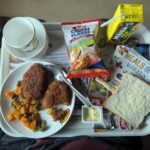
- My Breakfast Tray
-

- Snacking in the Upper Berth
-

- Our Train
-
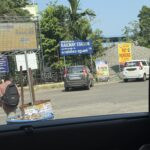
- Arrival Train Station
From Sleeper Cabin to Sunset Suite- 4 nights at the Taj Malabar Resort and Spa
A Royal Welcome at the Taj
After an hour’s drive from Ernakulam Junction Railway Station, our driver turned into the entrance of Taj Malabar Resort & Spa on scenic Dolphin’s Point. The journey itself felt special. The hotel had sent a gleaming black BMW, complete with chilled bottled water and fresh orchids waiting inside—a thoughtful touch after a night on the train.
We thought the welcome couldn’t get any better…until we stepped out of the car. It seemed as though the entire staff had gathered to greet us. Four women in beautiful traditional dress welcomed us with music and dance, immediately setting the tone for our stay.
*The Taj Malabar is part of the American Express “The Hotel Collection.” We paid $882 all in for 4 nights at this lovely property, with a lavish breakfast buffet included, plus $100 hotel credit, late check out, and room upgrades where available. And, we were refunded $300 of the cost in the form of Amex’s semi-annual hotel credit. What a great deal!
Within minutes, we learned we’d been upgraded to a corner sunset-view room. Thanks to windows on two sides, the room offered nearly 180-degree views over the water, allowing us to watch ferries, fishing boats, and the golden Kerala sunset from almost anywhere in the room. After weeks of unforgettable adventures across India—and an overnight train ride to get there—it was the perfect place to slow down, breathe deeply, and simply soak it all in.
As for the location… we tend to like staying in or near centers of activity rather than in remote locations. We chose Kochi because there would be restaurants and night life if we wanted to go out. If we had it to do over, as lovely as the Taj Malabar was, we would choose a hotel IN Fort Kochi. The Taj was located on a separate island, so getting to and from town was a bit of a hassle. But, we made the most of it, enjoying whimsical tuk tuk rides to and from town. Their sparkling infinity pool was the perfect place to watch the backwaters come alive with passing boats and fiery sunsets.
-

- Taj Malabar from the Water
-
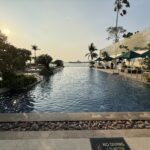
- Pool at Taj Malabar
-
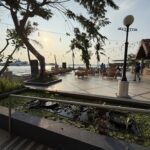
- Dolphin Point, Taj Malabar
Other Options in Kerala
While Kochi makes an excellent base for exploring Kerala, it’s far from the only place worth staying. If you’re looking for tranquility, consider the backwaters around Alleppey (Alappuzha) or Kumarakom, where houseboats and waterfront resorts offer a slower pace of life. Nature lovers may prefer Thekkady, home to Periyar National Park and spice plantations, while beach enthusiasts can head south to Varkala for dramatic cliffs overlooking the Arabian Sea or Kovalam for its classic crescent beaches. If cooler temperatures and mountain scenery are more your style, Munnar is famous for its rolling tea plantations, misty hills, and hiking opportunities. Each destination offers a different side of Kerala, making it easy to tailor your visit to your interests.
Kochi and Kerala
Kochi Sightseeing
Wanting to see Kochi’s highlights without spending days navigating the city on our own, we booked a Kochi Sightseeing Tuk-Tuk Tour through Viator—and it turned out to be one of the best values of our stay. In just half a day, our driver whisked us through the city’s fascinating blend of cultures and history, from the charming colonial streets of Fort Kochi to the famous Chinese fishing nets lining the waterfront. We even tossed in a few rupees for the chance to help raise one of the enormous nets ourselves—a fun, hands-on experience that gave us a new appreciation for the teamwork and skill involved in this centuries-old fishing tradition.
Our tour also included stops at the beautiful Santa Cruz Basilica, the historic Mattancherry Palace (often called the Dutch Palace), the colorful Hindu temple, and the fascinating outdoor dhobi khana (laundry).
Fort Kochi is home to one of the oldest Jewish communities in India, whose history dates back centuries through trade along the Malabar Coast. Jewish merchants played an important role in Kochi’s development as an international trading port, dealing in spices, precious stones, and other valuable goods. Their legacy lives on in the beautifully restored Paradesi Synagogue, built in 1568, the charming streets of Jew Town lined with antique shops and cafés, and the colorful blend of cultures that continues to define Fort Kochi today. Even though only a handful of Jews remain, their influence is still an important and fascinating part of the city’s story.
It was an easy, enjoyable way to experience the city’s Portuguese, Dutch, British, Jewish, Hindu, and Chinese influences—all within a few hours. If your time in Kochi is limited, I highly recommend this tour as an excellent introduction to one of India’s most fascinating coastal cities.
Dining in Kochi
One thing that surprised me about Kochi was just how diverse the dining scene had become. Of course, you’ll find plenty of opportunities to enjoy traditional Kerala specialties like seafood curries, appam, puttu, and fragrant biryanis, but the city has also embraced an international food culture. There were trendy cafés serving artisan coffee and wood-fired pizzas, upscale restaurants inside luxury hotels, and plenty of casual eateries catering to both locals and visitors.
Fort Kochi, in particular, had an eclectic, laid-back vibe that reminded me of a beach town where cultures from around the world have mingled for centuries. Alongside classic Indian restaurants were colorful cafés serving smoothie bowls, fresh juices, vegan and vegetarian fare, and other “hippie-trippy” creations that felt perfectly at home in the neighborhood. Whether you’re craving authentic South Indian cuisine or just need a break with a great cappuccino and a slice of cake, Kochi has something for nearly every taste and budget.
Here are some of the places we tried:
Fort Kochi Seafood at the Casino Hotel
For a splurge-worthy seafood dinner, Fort Cochin Seafood Specialty Restaurant is hard to beat. The fresh catch of the day, prepared with Kerala spices and coastal flavors, made this one of our most memorable meals in India. My favorite part of this meal was the ambience- the open air dining room contained several candlelit tables and had romantic amber lighting.
The seafood was fresh and delicious- we opted for a massive seafood platter
Casino Hotel, C.V. Iyer Road, Willingdon Island, Kochi, Kerala, 682003
Fusion Bay
Fusion Bay is a very unique restaurant because it specializes in Kerala’s famous Syrian Christian cuisine, a unique culinary tradition developed by one of the world’s oldest Christian communities. Rich coconut milk curries, fragrant spices, fresh seafood, and perfectly fermented appams combine to create dishes that are distinctly Keralan while reflecting centuries of cultural and spice-trade influences. The menu was extensive and contained numerous interesting takes on more common Indian dishes. It reviews as one of the best restaurants in Kochi and our meals were delicious!
Santacruse Basilica Junction
1/568 KB Jacob Road
Kunnumupuram, Fort Kochi
Kochi, Kerala 682001, India
Kochi Kapital Kafe
Kochi Kapital Kafe was a small, stylish café with the kind of polished, hip atmosphere that felt right at home in Fort Kochi. Located on Peter Celli Street, it serves as an all-day bistro, with specialty coffee, breakfast dishes, sandwiches, burgers, tacos, international comfort food, and vegan and gluten-free options. The menu leans more global and contemporary than traditionally Keralan, but that was part of its appeal—it was a fun place to take a break from curries and enjoy beautifully presented food in a cozy, modern setting. The café felt trendy without being pretentious, with a creative menu and the relaxed energy of a neighborhood spot you could easily linger in over coffee.
Princess Street & Peter Celli Street, between Santa Cruz Basilica and St. Francis Church, Fort Kochi, Kerala 682001, India.
Francis
After a full day exploring Fort Kochi’s historic streets, we stumbled into Francis, a cozy pub tucked inside a beautifully restored Dutch colonial building. With one of the city’s best beer selections, live music, and a relaxed atmosphere, it was the perfect place to escape the tropical heat and toast another incredible day in Kerala. Sometimes the best travel memories aren’t the ones you meticulously plan—they’re the unexpected places where you linger over a cold drink and soak up the local vibe. I highly recommend their French fries! Hot and crispy on the outside, soft on the inside, and just salty enough.
Quiero Street
Fort Nagar, Fort Kochi
Kochi, Kerala 682001, India
X Hostel
One of our favorite surprises in Fort Kochi was searching for ice cream and stumbling into the café inside XHostel. Hidden behind a lush courtyard filled with hanging plants, it featured a serious espresso bar with one of the best affogatos we had in India. You don’t have to be staying at the hostel to enjoy it—it’s a wonderful place to escape the heat with a perfectly crafted coffee.
1/640 Quiros Street (Post Office Road)
Next to XHostel
Fort Kochi
Kochi, Kerala 682001, India
Gelato Pillai
We had a fun experience here- we headed over after dinner at Fusion, and noticed there was a line at this gelato cafe. Several people were waiting for the owner to return and open the shop… so we joined the queue and made friends with some travelers from Italy and a few locals who invited us to a cave rave… unfortunately, we were leaving before the party.
The affogato was worth the wait- espresso with mocha gelato for him and coconut gelato for me. Highly recommend! It is located diagonally across the street from Fusion Bay.
Taj Malabar
I’ll admit, we had several meals at our hotel restaurant. The breakfast and dinner buffets were lavish and had several stand out dishes.
One unexpected highlight of the dinner buffet was a simple coconut vegetable dish that quickly became one of Vuong’s favorites. He enjoyed it so much that the chef graciously shared the recipe with him—a wonderful gesture of Kerala’s warm hospitality that allowed us to bring a little taste of the Taj Malabar home.
Other stand outs we ordered a la carte were their green and red THAI curries! We liked them so much, we had them twice! Two of the best dishes we had in India! Kinda funny…
-
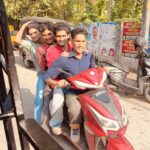
- Boys’ Day Out
-
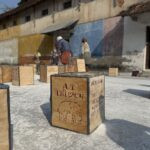
- Spice Market, Fort Kochi
-
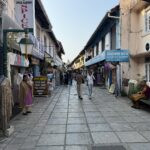
- “Jew Town,” Fort Kochi
-
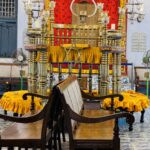
- Inside the Synagogue, Fort Kochi
-

- Synagogue, Fort Kochi
-
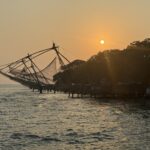
- Chinese Fishing Nets at the Mouth of the Arabian Sea
Ayurvedic Spa
We thought we’d give Ayurvedic body treatments another try. We found Induz Ayurcare .
For less than $50 USD each, we had 2 hour body treatments which consisted of a body scrub, mask, and a massage. The “best package” we booked was: Abhyanga (massage)+ Body scrub + Body pack (full body mask). Rs 4500/120 mins.
It was definitely not like visiting a Western spa—and that’s part of what made it so memorable.
The treatment began with the massage, which surprised me since I’m used to massages coming at the end of a spa day. Unlike a Western massage that focuses primarily on easing sore muscles, an Ayurvedic Abhyanga massage is a full-body wellness ritual. Using generous amounts of warm herbal oil and long, rhythmic strokes, it’s designed to promote relaxation, improve circulation, and nourish the skin. It felt very different from the massages I was used to—but I enjoyed it very much.
Afterward came the scrub and body mask, and I spent a little while lying there waiting for it to dry. I won’t lie—I got a bit chilly during that part—but once everything was rinsed off, my skin felt incredibly soft and silky smooth. The facility was clean, the therapists were professional, the experience felt authentic, and it was a fun way to immerse ourselves in one of Kerala’s most famous traditions.
Appointments were easy to get during our visit (tourism took a dive because of the war), although I’ve read it can become quite busy during peak tourist season, so booking ahead may be worthwhile if you’re traveling during the winter months.
Bike Tour Kerala Backwaters
This tour was a highlight of our trip! I cannot recommend this enough!
If you haven’t noticed, we just can’t relax. We have to have at least one day now and then of pre-dawn awakening to torture ourselves with exercise…I’m kidding of course! We love to exercise, especially when we can combine exercise with exploration. One of our favorite ways to do this when traveling is by taking bike tours. You gotta start early! It is HOT.
We chose Godwit Adventures (named after a migratory shore bird) because we wanted to experience the quieter side of Kerala rather than simply visit another list of attractions. Their philosophy centers on slow, immersive travel—exploring the backwaters by bicycle, learning about local birdlife, meeting fishermen and craftsmen, and experiencing everyday village life. It felt less like a tour and more like spending the morning with a knowledgeable local who genuinely loves sharing his home.
Our guide, Tubin, struck the perfect balance between naturalist, storyteller, and local ambassador. Whether he was spotting a kingfisher before we even knew it was there or explaining the craftsmanship behind Kerala’s traditional wooden boats, his enthusiasm for his home was contagious.
Godwit sent a driver to pick us up at the Taj Malabar around 5:30 am for the hour-long drive to Breeze Backwater Homes, a quaint boutique homestay in the Alappuzha (Alleppey) backwaters of Kerala. If you really want to get away from it all at an insanely low price, book this place! Rooms start at $35 a night, the service and food are phenomenal and the setting is idyllic. They offer houseboat day trips and overnight stays (a huge thing in this part of India), canoe rides, bike rides with Godwit, yoga, and Ayurveda.
The bikes were not your typical rental bikes. Instead, they were well-maintained mountain or hybrid bikes (possibly Giant or Trek) with wider, knobby off-road tires that made navigating the brick paved paths, dirt and gravel roads, and sometimes rough pavement much more manageable.
The 25 km ride was not easy, but it was flat and we took it slow for the most part. In some areas, we shared the road with cars, but they were few and far between. We rode through wetlands teeming with birds, including Changaram and Pallithode Wetlands, which contain some of the state’s most important bird habitats.
Each winter, thousands of migratory birds arrive from as far away as Siberia and Central Asia, taking advantage of the rich mudflats, mangroves, and shallow lagoons before continuing their incredible journeys. Cycling quietly through this remarkable ecosystem gave us a chance to appreciate not only its beauty, but also why protecting places like Changaram matters. We saw a total of 22 bird species that day, and Tubin provided a checklist for us afterwards!
We rode past fish farms, Chinese fishing nets, and through villages. We saw an early morning fish auction, had Chai with the locals, saw fishing boats being constructed, and stopped by Chellanum Harbor to observe the colorful boats and breathe in the salty air. We even took a “ferry,” which was a small canoe with a single paddler, much like I’d expect crossing the River Styx.
This ride with Godwit Adventures allowed us to experience a side of Kerala few tourists see—where fishermen cast their nets, farmers tend their fields, birds forage along the water’s edge, and everyday village life unfolds at an unhurried pace. It was a beautiful reminder that some of the best travel experiences aren’t found at famous landmarks, but in the quiet places where nature and local culture have existed in harmony for generations.
When we arrived back at Breeze Homestay, we were rewarded with a lavish breakfast of fresh watermelon juice, vegetable curry, omelettes, fruit, and Puttu– Kerala’s iconic steamed breakfast made from layers of coarsely ground rice flour and fresh grated coconut.
Book Village Bike Tour & Birdwatching with Godwit Adventures. This was one of the highlights of our entire trip to India! Did I mention the bike trip (transfers included) was around $30 per person?
-

- At the Harbor, Kerala
-
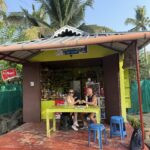
- Morning Masala Chai
-
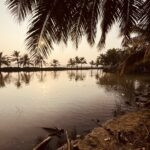
- Fish Farm
-

- By the Water with Tubin
-

- Waiting for the Ferry
-
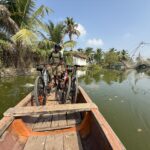
- Onboard the Ferry
Kochi Folklore Odeum
One of the absolute must-do experiences in Kochi is seeing a performance of Kerala’s traditional dance and martial arts. We chose the Kochi Folklore Odeum and upgraded to tickets that let us arrive early to watch the performers transform themselves with their elaborate makeup and costumes. While it was interesting to see the painstaking process up close, I honestly think I’d skip that part next time and just arrive for the performance itself.
The evening began with Kathakali, Kerala’s iconic classical dance-drama. The story—if I understood correctly—was drawn from the Mahabharata, one of India’s great Hindu epics. The intricate costumes, vividly painted faces, and incredibly expressive eyes, facial expressions, and hand gestures told the story without words and made it surprisingly engaging. Every movement seemed to carry meaning, turning the performance into a visual language all its own.
Next came Kalaripayattu, a martial art that originated in Kerala and is often considered one of the world’s oldest fighting systems. The performance blended graceful, yoga-like stretches and flowing movements with explosive acrobatics, fast-paced combat, and demonstrations using traditional weapons. It was easy to see how this ancient practice requires incredible strength, flexibility, balance, and precision.
My favorite part of the evening, though, was the Theyyam performance. The performer emerged wearing an enormous circular headdress that reminded me of a giant Mayan calendar (my own admittedly Western frame of reference), with brilliantly colored makeup and an elaborate costume that seemed to change color in different lighting.
As the drums intensified, he spun, stomped, and moved with such intensity that he seemed almost possessed. Theyyam is a sacred ritual art form in which the performer is believed to embody a deity or ancestral spirit, and whether you understand the religious significance or not, the energy is unforgettable. It was mesmerizing, dramatic, and unlike anything I’ve ever seen before—one of those travel experiences that sticks with you long after you get home.
-

- Kathakali
-

- Kalaripayattu
-

- Theyyam
Leaving India
As our journey through India came to an end and we prepared to fly on to Kuala Lumpur, I found myself feeling both satisfied and a little sad. We had seen bustling megacities and quiet villages, ancient temples and modern skylines, royal palaces and humble homes. We witnessed incredible wealth alongside profound poverty, breathtaking natural beauty alongside astonishing human ingenuity, and everywhere we went, we were met with warmth, generosity, and genuine kindness.
India challenged me, surprised me, and inspired me in ways I never expected. While I know there’s still so much left to discover, I left feeling grateful that we had experienced as much of this remarkable country as we could—and knowing that one day, I’ll be back.
Next up: one final, unexpected stop before heading home. What began as a simple extension to our trip introduced us to Kuala Lumpur—a vibrant, modern city that completely surprised us and had us wondering if we could actually see ourselves living there.

0 Comments