It was 2021, and we paired Egypt with our trip to Morocco because, on a map at least, they looked relatively close together. Somehow we ended up flying through Paris anyway, which isn't actually as far out of the way as it sounds.
Sara met us in Cairo.
We were still traveling during COVID, which meant tests, masks, and all the complications of international travel at the time—but it also gave us an extraordinary gift in Egypt: there simply weren't many tourists.
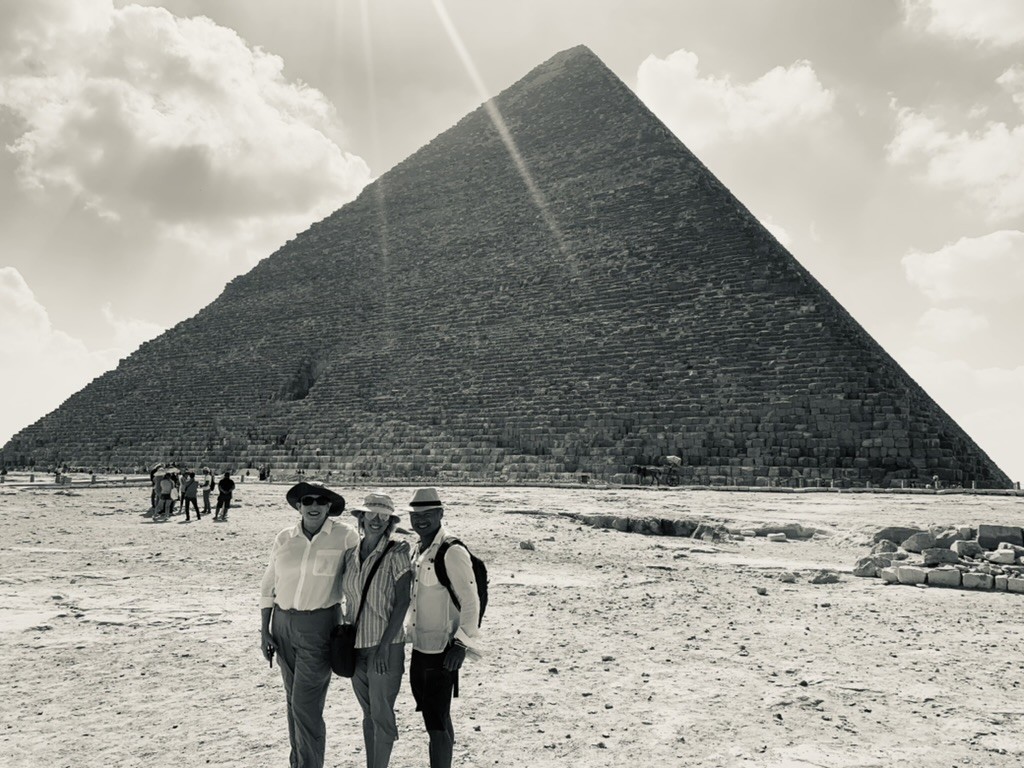
Our first hotel was near Giza, and we could see the pyramids from our room.
There are certain places you've seen so many times in books, movies, documentaries, and photographs that you think you know what they're going to look like.
You don't.
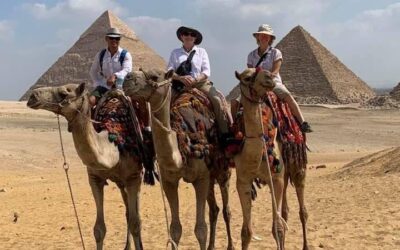
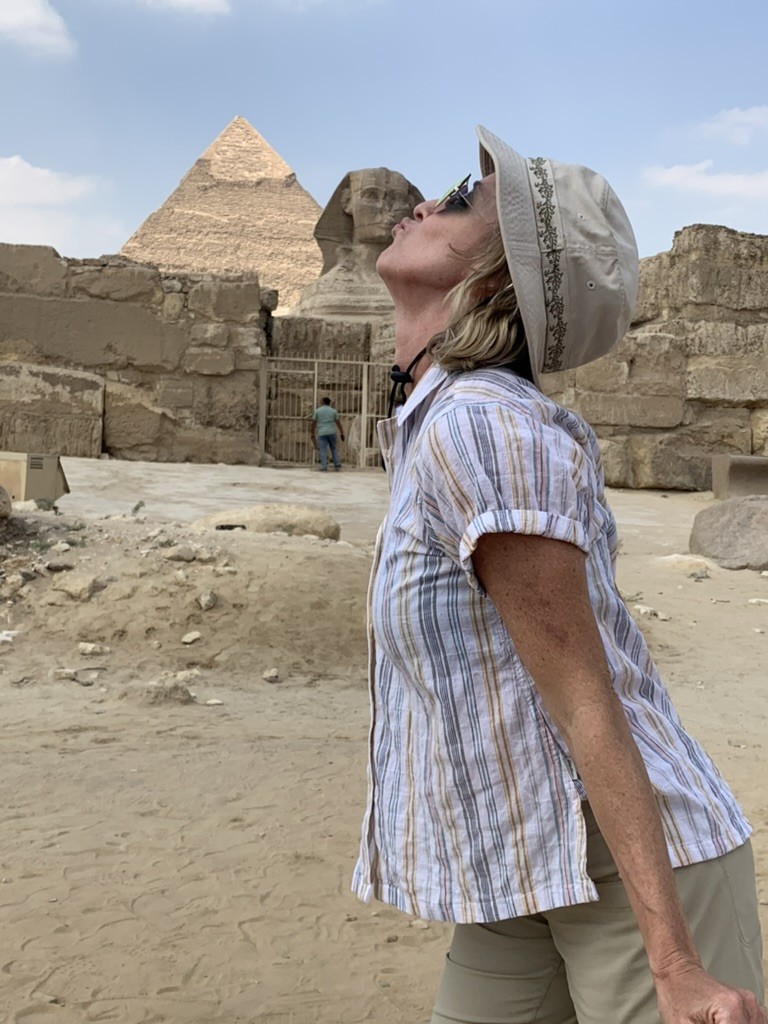
The pyramids were enormous. Not theoretically enormous. Not I know the measurements enormous. Standing-at-the-bottom-looking-up enormous. There were camels, the Sphinx, police officers on camels, and us taking all the obligatory ridiculous pyramid pictures.
And there was Aboudy.
Aboudy was our guide and a certified Egyptologist, and he became a huge part of what made Egypt so memorable. We spent a lot of time driving on this trip, and he filled those hours with stories about Egyptian history, religion, hieroglyphics and everyday life.
He didn't just show us things. He taught us how to look at them.
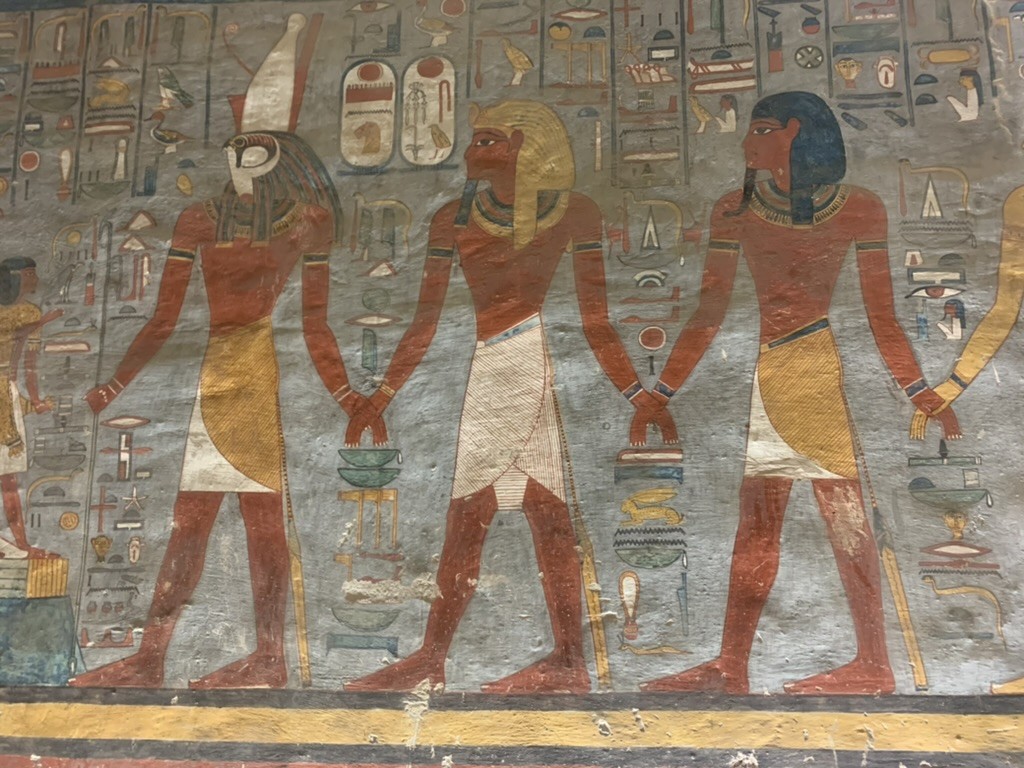
He found the hieroglyphs for “Sa Ra”—Son of Ra—because it sounded like Sara, so naturally we photographed her posing beside her ancient Egyptian namesake. Hathor, often depicted with cow horns, became permanently known to us through Aboudy as the goddess of the “Holy Cow.”
And then there was Ramses II.
Ramses was everywhere. Giant statues. Temples. Monuments. More giant statues.
We began referring to him as Ramses the Humble.
From Giza we went to Koshari Abou Tarek, where we ate koshari with Cairo's workday lunch crowd, and then to the Egyptian Museum. I had been reading about Egyptian history before the trip—Amenhotep, Tutankhamun and the endlessly complicated parade of pharaohs—so suddenly standing in front of the things I'd been reading about was fascinating.
That happened over and over in Egypt.
History kept becoming real.
That night we boarded the overnight train to Aswan. While we waited, a gaggle of giggling girls wanted their pictures taken with me. I have no idea what they found so fascinating, but for a few minutes I enjoyed my brief career as an Egyptian celebrity.
The train itself was fine. Our little compartment had bunk beds, and I'd taken an overnight train before.
Unfortunately, I spent much of this one sick in a bathroom that felt approximately 90 degrees.
By Aswan I was beginning to recover.
Vuong was about to take his turn.
We were essentially running a gastrointestinal relay race through Egypt.
Fortunately, Aswan was a pretty spectacular place to recover. Our hotel overlooked the Nile, and we visited Philae Temple by boat, ate dinner in a Nubian village and visited a local home with a dirt floor—and a crocodile living in a pit in the living room.
As one does.
Then we boarded a felucca for an overnight trip down the Nile.
The entire deck was essentially one giant mattress with a bowl of fruit in the middle. I sprawled around eating fruit like a Roman noble, missing only a gladiator feeding me grapes.
Vuong, who was now holding the gastrointestinal baton, was not having quite the same experience.
At one point we stopped and decided we were going to swim in the Nile. I made it about knee-deep before something that looked suspiciously like donkey poop floated past me.
Thus concluded my swim in the Nile.
But traveling by water changed the way Egypt looked. From the Nile, you could see just how sharply life followed the river. Green fields hugged the water while desert stretched beyond them. Later, from a hot-air balloon over Luxor, the contrast was even more striking.
The Nile wasn't simply part of the landscape.
It was the reason the landscape could support life at all.
After the felucca, we spent the night in Aswan and got up painfully early for the roughly four-hour drive to Abu Simbel.
It was worth it.
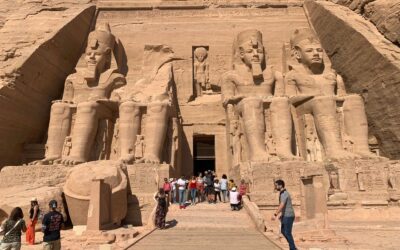
Nothing prepared me for the scale of the place. Four colossal statues of Ramses II sit across the front of his temple, each about 66 feet tall.
Because apparently one 66-foot statue of yourself would have been insufficient.
Nearby is another temple honoring Nefertari, his Great Royal Wife, depicted there at an unusually monumental scale.
Ramses the Humble strikes again.
By the time we reached Luxor, we'd settled into our own increasingly questionable system of Egyptology.
At Karnak, Aboudy helped us decipher hieroglyphics and explained what the symbols actually meant. Vuong had his own interpretive method. Anything that looked remotely like a spacecraft or extraterrestrial immediately earned an enthusiastic “ALIENS!” and an impression of the wild-haired guy from Ancient Aliens.
At Deir el-Medina, the Valley of the Workers, I learned something I hadn't really understood before the trip. The magnificent royal tombs weren't simply built by anonymous masses of slaves. There was an organized community of skilled artisans who built and decorated them.
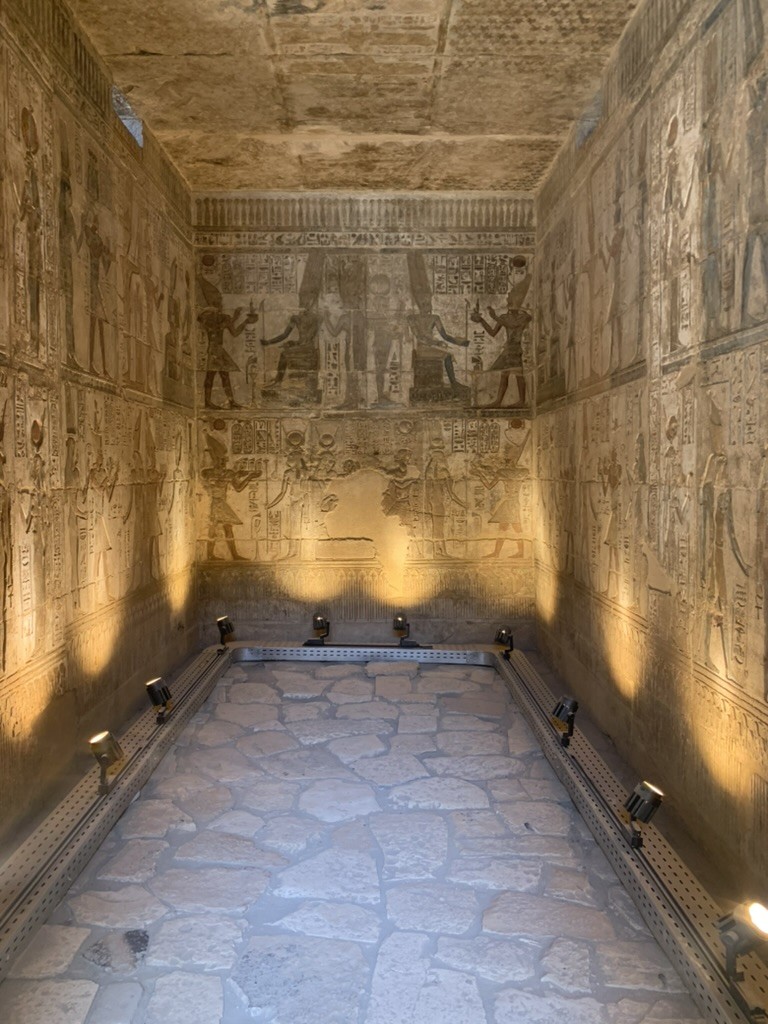
We went inside the tomb of Sennedjem, where colors painted thousands of years ago were still astonishingly vivid.
Then came the Temple of Hatshepsut, one of ancient Egypt's most powerful female rulers.
To help us remember Hatshepsut's name, we started calling her Hot Shit Soup.
Considering the gastrointestinal events of the previous several days, this was an unfortunate but remarkably effective mnemonic.
At the Valley of the Kings, we took Aboudy's advice and chose three tombs.
Unless you're really into dead pharaohs, three is plenty.
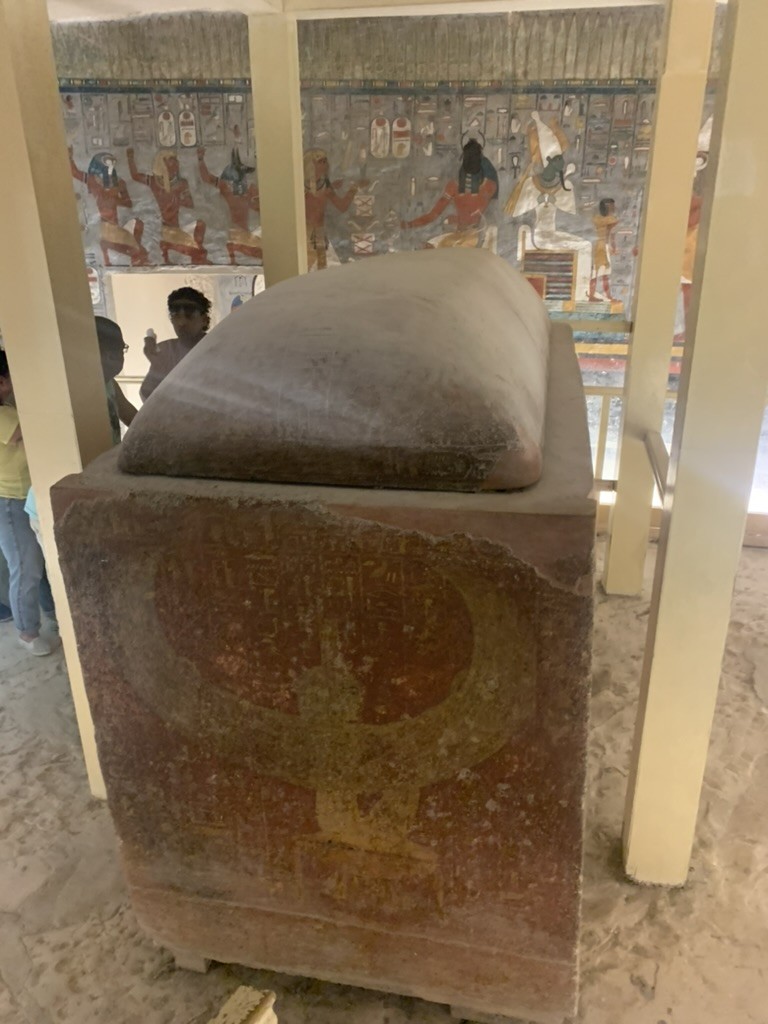
It was hot. It was dry. There were tourists everywhere. But inside, portions of the artwork still retained colors painted more than three thousand years ago. One tomb still held its enormous red stone sarcophagus.
That was the part of Egypt I kept struggling to wrap my head around—not simply that these things were ancient, but how ancient they were and how much was still there.
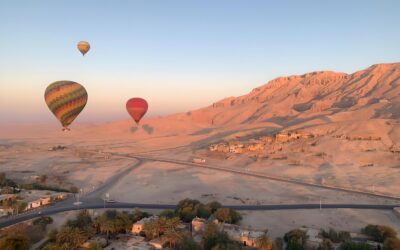
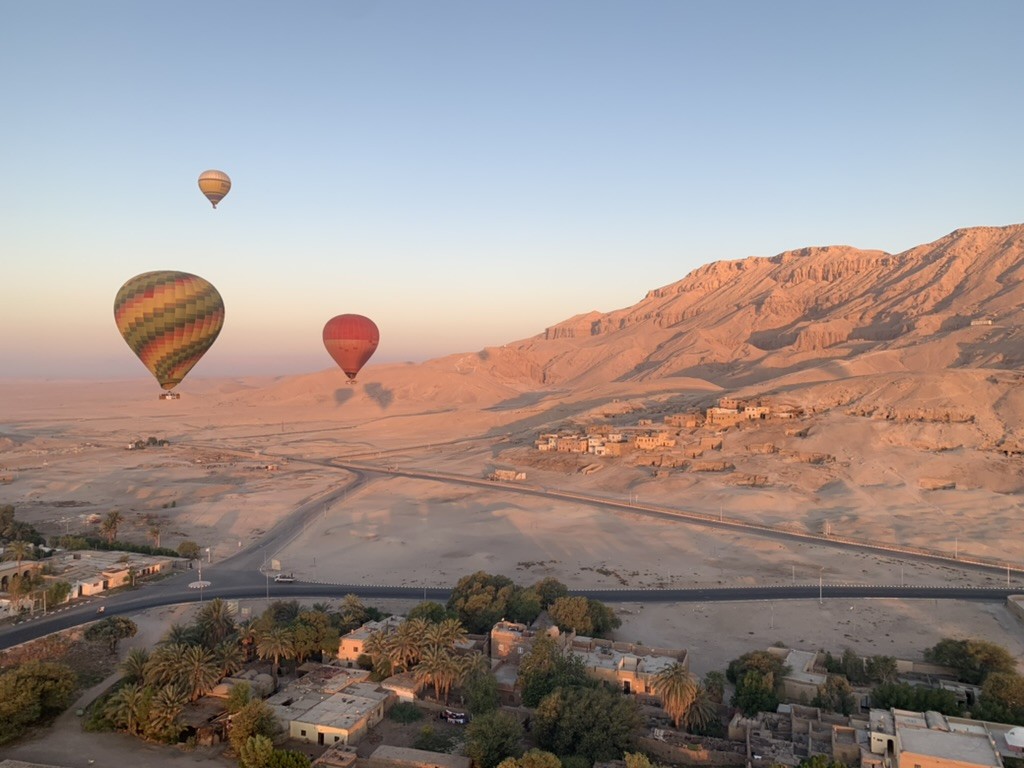
One morning we got up around 4 a.m., crossed the Nile by boat and climbed into a hot-air balloon.
As the sun rose over the West Bank, the Nile cut a brilliant green ribbon through an otherwise tan landscape. We floated over fields, temples and the Colossi of Memnon while the desert stretched beyond them.
The landing was almost as memorable as the flight.
A truck came careening across the landscape toward us. It stopped, a bunch of men jumped out and started running in our direction, and for one brief moment this seemed mildly concerning.
They were the ground crew.
Apparently this is simply how you land a hot-air balloon in Egypt.
We ate camel burgers on a rooftop overlooking Luxor, drank fresh pomegranate juice beside the Nile and visited Aboudy's family's bookstore. We spent hours driving through Egypt, which sometimes produced experiences no itinerary could have planned. At one point we stopped in a random village, where a man in a little bar let us use his bathroom.
He had toilet paper.
At that point in the trip, this qualified as luxury.
We stayed and had coffee with him.
And then there were the pyramids beyond Giza.
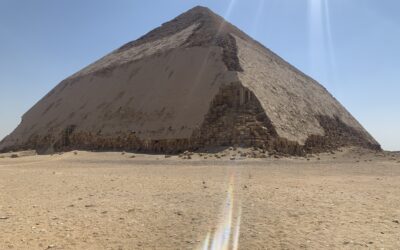
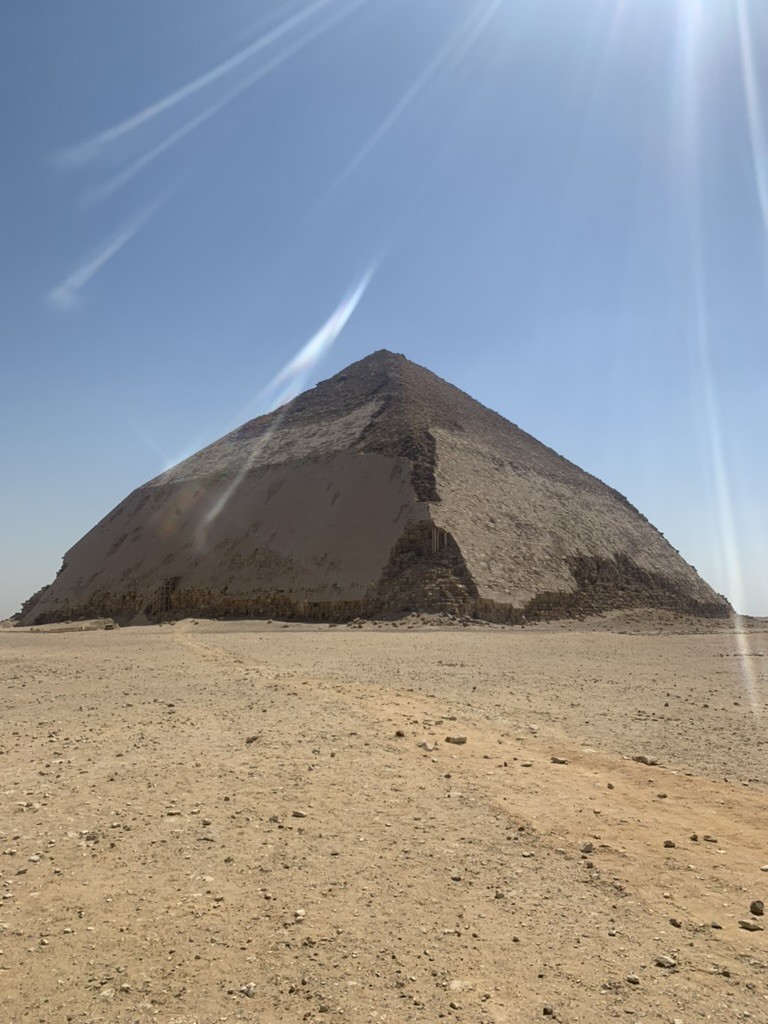
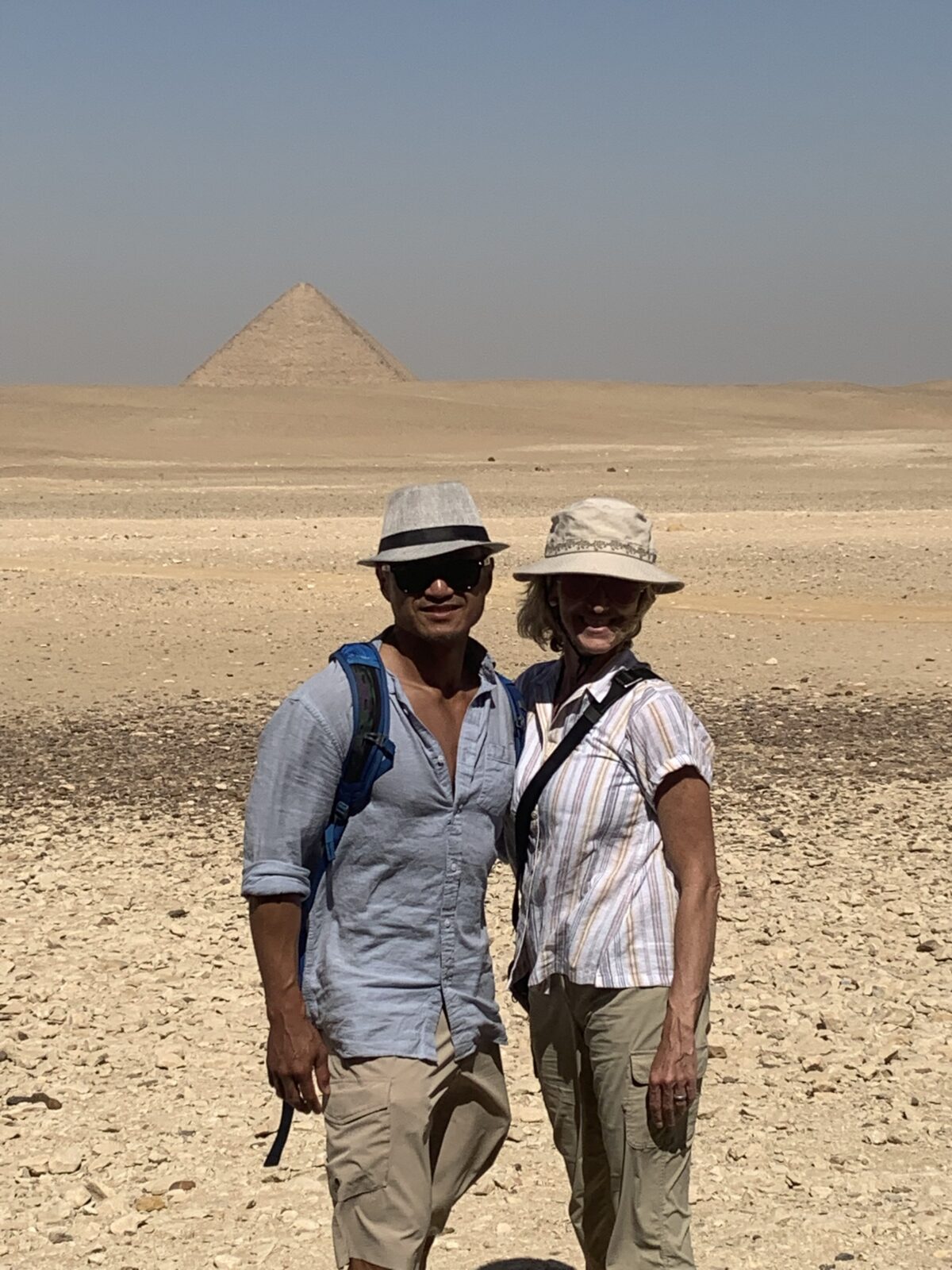
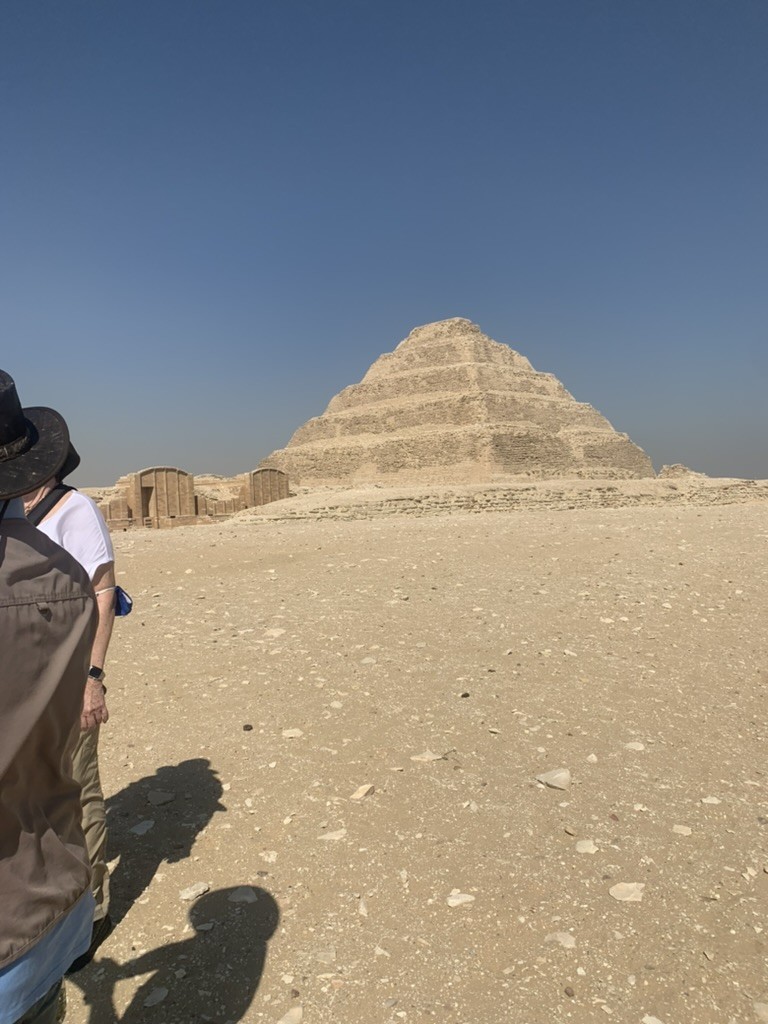
At Saqqara we saw Djoser's Step Pyramid, where you can begin to see the idea of the pyramid taking shape. At Dahshur came the Bent Pyramid, where the angle visibly changes partway up, and the Red Pyramid, the first successful true smooth-sided pyramid.
Suddenly Giza wasn't an isolated miracle.
We were seeing the experiments that eventually made it possible.
And we didn't just look at them.
We crawled around inside them.
Getting into the Bent and Red Pyramids meant backing down long, steep passages with wooden slats beneath our feet, hunched over the entire way. I'm 5'2", and even I couldn't stand upright. We descended deeper and deeper through the stone into chambers buried beneath an unimaginable amount of weight.
The Red Pyramid smelled overwhelmingly of ammonia.
Then Aboudy spotted someone he knew.
A conversation followed. Aboudy excitedly waved us over, and suddenly we were being allowed inside a small satellite pyramid that normally wasn't open to visitors.
Apparently Aboudy knew people.
We weren't just looking at how the Egyptians learned to build pyramids.
We were crawling around inside the experiments.
Eventually we returned to Cairo, where Egypt shifted again.
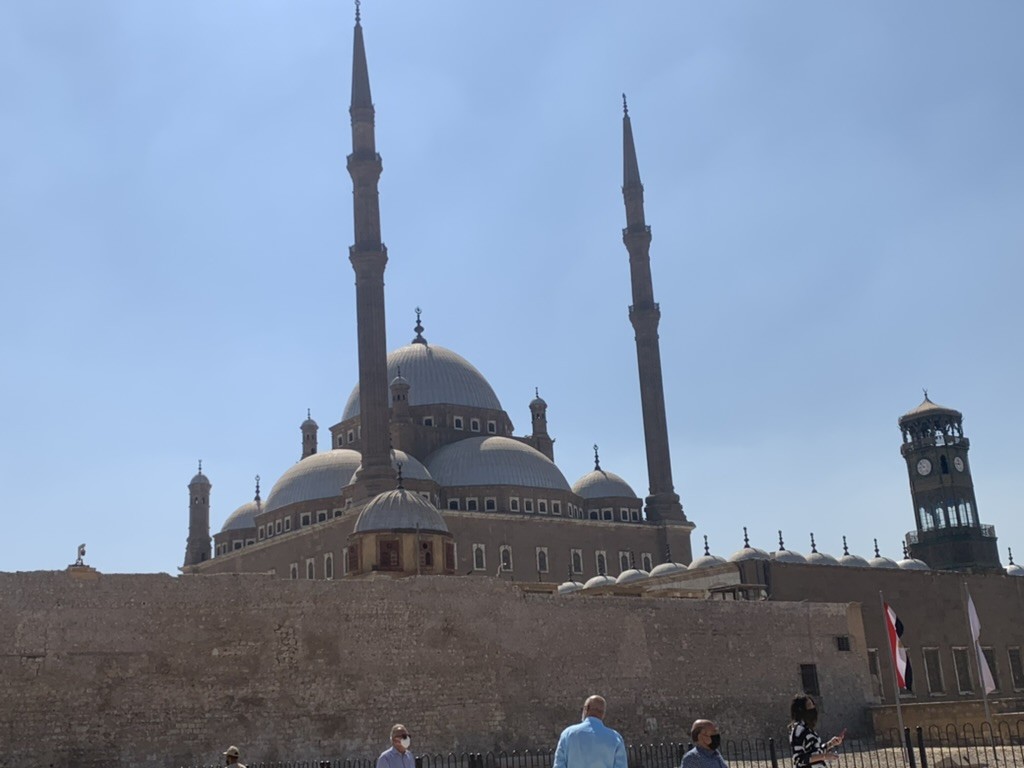
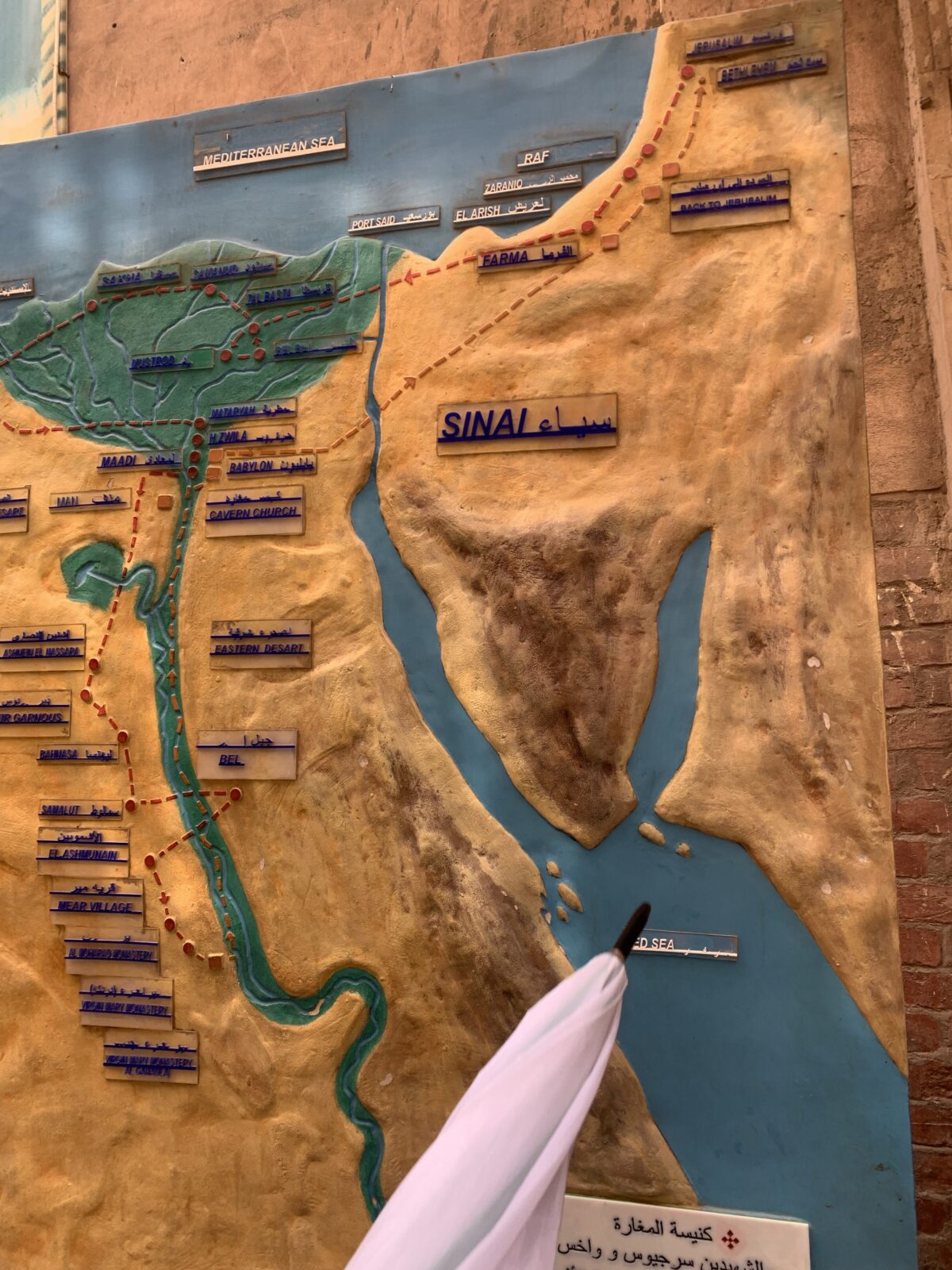
At the Hanging Church in Coptic Cairo, I was reminded how deeply Egypt is woven into the biblical stories I'd known since childhood. We visited a Jewish synagogue. At the Alabaster Mosque, we sat on the prayer rugs while Aboudy explained Islam and the Five Pillars.
The religions I'd learned about as separate subjects didn't feel quite so separate anymore.
Their histories overlapped. Their people had lived in the same places, told some of the same stories, fought, worshipped, built, borrowed ideas from one another and left pieces of themselves behind.
That's one of the reasons I travel.
History makes more sense to me when I can stand where it happened. Religions that seem separate on paper begin to overlap. Ancient civilizations stop being dates and names and become people who worked, argued, worshipped, governed themselves, raised families—and occasionally built 66-foot statues of themselves.
I went to Egypt expecting pyramids, pharaohs and temples.
I got those.
I also got the Holy Cow, Ramses the Humble, Hot Shit Soup, ALIENS!, an intestinal relay race, donkey poop in the Nile, an ammonia-scented pyramid, and a guide who knew a guy.
But somewhere among all of that, Egypt did something I hadn't expected.
It made thousands of years of history feel connected.
Travel doesn't just show me the world. It helps me understand how the world became what it is.