

Introduction
Hanoi was the first place we ever visited in Vietnam, almost ten years ago. It was our first taste of a country that would ignite—and never quite satisfy—our appetite for more. It is a gritty city with layers. When we first glimpsed the sea of scooters, like a school of fish, zipping around beneath rat’s nests of thick electrical cables hanging like Christmas garlands over narrow streets, we were fascinated and a little nervous. Read about that first trip here.
The words were familiar yet alien- signs in different fonts and colors, large and small, advertising many things but weighted heavily toward food. Horns beeped, the sun beat down, and we dived in!
Hanoi is a perfect blend of history, culture, and modernity, from its French colonial architecture to its reminders of war and a history filled with conflict, most of which ended with the Vietnamese people on top.
Nearly ten years and four trips to Vietnam later, Hanoi still feels like the perfect place to begin. So let’s dive into the chaos—what to see, where to stay, what to eat, what you can skip, and a few things we’ve learned along the way.
Hanoi at a Glance
Country: Vietnam
Status: Capital and second-largest city in Vietnam
Population: About 8.7 million
Size: About 1,297 sq mi / 3,360 km²
Founded as the capital: 1010
Historic name: Thăng Long (“Ascending Dragon”)
Meaning of Hanoi: Roughly “inside the rivers”
River: Red River (Sông Hồng)
Currency: Vietnamese đồng (VND)
Language: Vietnamese
Time zone: ICT (UTC+7)
Airport: Noi Bai International Airport (HAN), about 35 km / 22 miles from central Hanoi
Ideal stay: 3 days; longer if using Hanoi as a base for exploring northern Vietnam
Best time to visit: October–December for generally cooler, drier weather
Getting around: Walking and Grab
Historic heart: The Old Quarter
Known for: Street food, lakes, scooters, French colonial architecture, temples, cafés, and gloriously chaotic streets
Eat this: Phở, bún chả, bánh cuốn, egg coffee, and bia hơi
Don’t miss: Hoàn Kiếm Lake, the Old Quarter, Temple of Literature, Ho Chi Minh complex, Imperial Citadel, and a water-puppet show (the last is is debatable)
Why Visit Hanoi
Hanoi doesn’t feel curated for visitors. It’s weathered, chaotic, and beautifully unpolished, a city where centuries of history are layered right into everyday life. Hanoi may have nearly nine million residents, but it feels smaller and more intimate than Saigon. Less cosmopolitan and more mysterious and enigmatic, it is a city of narrow streets and hidden corners, weathered buildings and ancient temples—a place where the past hasn’t been polished away, but remains tangled up with everyday life.
Hanoi rewards curiosity. Its biggest attraction isn’t any one temple, museum or monument. It’s what happens between them—the alley you wander down, the tiny café hidden upstairs, the street where every shop sells the same inexplicably specific thing, or the meal you eat sitting on a plastic stool while scooters stream past your knees.
Where to Stay in Hanoi
Stay in the Old Quarter on your first trip. Consider the French Quarter or Hoàn Kiếm lakefront if you want quieter and more polished; choose West Lake if you’ve been before or are staying longer.
I recommend choosing a hotel over an AirBnB unless you really want to stay in a condo or home. The service in Vietnam is over the top- so warm and hospitable. The breakfast spreads are lavish, and the prices are right! The popular hotels tend to be well-located.
*Prices are approximate and can vary significantly by season and room type. They are as accurate as possible at the time of writing in August 2026.*
The Old Quarter
The Old Quarter is the place to be, especially for your first visit to Hanoi. I HIGHLY recommend this hotel in the Old Quarter: La Siesta Classic Ma May. There you go. Done. NO need to look further! Walk out of your door into the beautiful chaos that is Hanoi! We were greeted with cold fruit juices and warm smiles. The staff was so accommodating and always called us by name. The breakfast spread was ridiculous, with selections from Vietnam as well as western style dishes and it was included. The restaurant, Red Bean, had a great menu as well and, to top it off, there is now a rooftop bar. Rates these days are hovering around $75-120.
Two other Old Quarter hotels I’d suggest are Bespoke Trendy Hotel Hanoi, a stylish four-star boutique hotel on a quieter side street that was formerly another La Siesta property (around $80 a night at the time of writing); it has the same emphasis on excellent service, plus a spa, restaurant and cocktail bar. For a smaller, more affordable option, San Boutique Hotel is tucked onto Hàng Hành near Hoàn Kiếm Lake, giving you an extremely walkable location with a quieter boutique feel and the attentive service Hanoi hotels do so well for around $140.
Hoàn Kiếm Lakefront
If the Old Quarter feels a little too chaotic, staying along Hoàn Kiếm Lake is an excellent alternative. You’re still within easy walking distance of the Old Quarter, night market, restaurants and major sights, but the setting feels greener, more open and a little calmer. La Sinfonía Majesty Hotel and Spa is a beautiful boutique option right by the lake, with a rooftop bar and excellent breakfast; rooms can often be found for around $100–150 per night, although lake-view rooms and suites cost more.
For more of a splurge, Apricot Hotel sits almost directly across from the lake and has a rooftop pool with fantastic views; expect roughly $120–250+ per night, depending on room and season. Another upscale choice is La Siesta Premium Lakeside, a polished five-star boutique hotel with the kind of high-touch Vietnamese service I love and a rooftop infinity pool; rates generally start around $185+, with lake-view rooms and suites climbing considerably higher.
French Quarter
If you prefer a little more polish and breathing room, the French Quarter is a great alternative. This is for travelers who like to be close to things, but maybe not completely immersed. It is close to Hỏa Lò Prison (Hanoi Hilton, do not recommend staying there, 0 of 5 stars by report) Just south of Hoàn Kiếm Lake, it has broad, tree-lined boulevards, grand French colonial buildings and the Hanoi Opera House, while still keeping you within walking distance of the lake and Old Quarter. (Hanoi Tourism)
For classic Hanoi luxury, Sofitel Legend Metropole Hanoi is the historic grande dame, dating to 1901; rooms are currently roughly $300–400+ per night. Nearby, the wonderfully theatrical Capella Hanoi is a serious splurge at roughly $400–600+, while Hotel de l’Opera – MGallery Hanoi offers a more attainable five-star option with an excellent location near the Opera House. If those prices sound excessive for Vietnam, smaller boutique hotels in the French Quarter can still be found for roughly $50–110 per night. This is the neighborhood I’d choose for travelers who want elegant, quieter Hanoi without giving up the ability to walk into the chaos whenever they want it.
West Lake
Again, not for your first time or if you want to be close to everything. This is a quaint, quiet neighborhood it is probably best to visit for an evening. If it appeals to you check out InterContinental Hanoi Westlake by IHG. It sits right over the water, with spacious rooms and balconies, a pool, several restaurants and an overwater Sunset Bar—exactly the sort of peaceful, full-service retreat that makes Tây Hồ appealing after a day in Hanoi’s chaos. It’s a particularly good choice for couples or repeat visitors who value lake views, sunsets and a resort-like feel over being able to walk out the door into the Old Quarter.
The Best Things to do in Hanoi
Explore the Old Quarter
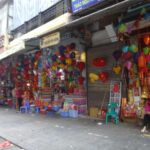
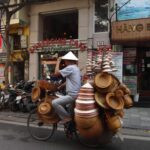
One of my favorite things about Hanoi’s Old Quarter is how entire streets seem devoted to selling one particular thing—a tradition left over from the old guild days when each street specialized in a specific trade. You’ll wander past block after block of jewelry shops, then suddenly find yourself on what we dubbed “Home Depot Street,” where every storefront seems to overflow with tools and hardware. Turn another corner and it’s flowers, shoes, silk, toys, books, or decorations. The Old Quarter is traditionally known as the “36 Streets,” and although the old guild system is long gone, its fingerprints are still everywhere Don’t follow a route. This is one place where getting slightly lost is part of the attraction. Wander, turn down alleys, stop for coffee, look in shops, eat something you can’t identify.
*Do a Scooter Food Tour*
MUST DO THIS!
Experience Hanoi like a local on the back of a scooter! Everyone in Hanoi… well really, in Vietnam… rides a scooter! Some do it alone, some with a pinion rider, some with their whole families, chickens, groceries, trees, mattresses,,, we’ve seen it all!
I cannot recommend Hanoi Motorbike Tours strongly enough!! We booked the “Hanoi by Night Foodie Tour.” This company is run by women and is affordable, safe, and offers a variety of city, food, and countryside tours. We had a group of 8. A fleet of 8 motorbikes for us plus a leader and a photographer/videographer collected us from our AirBnB in the Old Quarter (notice I do not recommend staying in an AirBnB… this comes from experience). They were actually a little early. They gave us a safety briefing, our cute little helmets, and we were off!
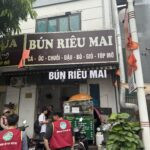
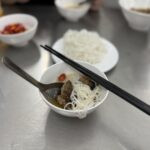
Our scooter food tour combined two of the things Hanoi does best: chaotic streets and incredible food. We started with bánh cuốn, delicate steamed rice rolls filled with seasoned pork and mushrooms, before heading to Bún Chả Hương Liên, now famous as the “Obama restaurant.” Barack Obama ate bún chả here with Anthony Bourdain in 2016, and the restaurant has preserved the table setting—dishes, utensils and even the beer bottles—in a glass case, along with photos from their meal. It is unapologetically touristy now, but the bún chả is still delicious, and eating the same quintessential Hanoi dish they shared was just plain fun.
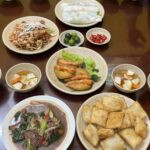
From there, we rode out toward West Lake for what turned out to be one of my favorite things we ate in Hanoi: deep-fried phở at Phở Cuốn 31. Crispy squares of fried rice noodles arrive topped with a savory beef-and-vegetable mixture, and they were absolutely amazing. They reminded me of Pani Puri, the well-known Indian street food delight. You poke a hole in your rice noodle cube and fill it with pho ingredients before dipping it in the aromatic broth. Fun and delicious!
Have Coffee at a cafe on “Train Street”
One stop on our food tour was a little cafe on Train Street, where you can sit impossibly close to the tracks with an egg coffee (cà phê trứng) or my everyday Vietnamese favorite, cà phê sữa đá—strong coffee with sweetened condensed milk poured over ice.
*Pro Tip: Train Street is actually several different stretches of the same railway, and they aren’t all created equal. Our tour took us to a quieter section where the cafés were mostly on one side of the tracks. If you want the iconic Train Street scene you’ve seen in photos—with tiny cafés, stools and colorful signs crowding both sides of the railway—head for the Old Quarter section around Trần Phú and Phùng Hưng Streets; entering near 5 Trần Phú will put you right in the middle of it. Access changes periodically for safety reasons, so don’t be surprised if a café owner has to escort you in, and always follow their instructions when a train is approaching.
Between stops, riding pillion through Hanoi’s sea of scooters was half the adventure. You can certainly seek out all these foods independently, but having a local driver who knows exactly where to go—and navigating Hanoi traffic without having to be responsible for your own survival—made the scooter food tour one of our favorite ways to experience the city.
-

- Train Street, Hanoi
-

- Train Street Hanoi
-

- Broom Village Near Hanoi
-

- Our Vespa Gang
-
- Lunch on our Scooter Tour
-

- President Obama and Anthony Bourdain share Bun Cha
-
- Obama Combo, Bun Cha
-

- Contemplating Rice Paddies
-

- Scooting Through Rice Paddies
-
- “Deep Fried Pho”
-

- Enjoying Egg Coffee
-
- Tonkin Palace, Hanoi
Go to Hoàn Kiếm Lake After Dark
If you’re in Hanoi over a weekend, come back to Hoàn Kiếm Lake at night after the heat of the day has passed. From Friday evening through Sunday, the streets surrounding the lake are closed to traffic and become a giant pedestrian gathering place, filled with families, street performers, games, music and food. Without the usual stream of scooters, the entire personality of the area changes.
We actually witnessed something that turned our heads and stopped us in our tracks- a guy playing a flute with his nose! This is not a guaranteed attraction, but I’m hopeful! We saw old folks making use of the outdoor gym equipment that lines the shores of many rivers and lakes in the cities of Vietnam. Kids played with glow sticks and RC toys, old guys played cards or Cờ tướng (Chinese chess/Xiangqi), younger guys played hacky sac, all while women ran the booths selling everything from fresh fruit juice to underwear.
Visit the Old Quarter Night Market
The Old Quarter Night Market begins just north of Hoàn Kiếm Lake on Hàng Đào Street and winds through the Old Quarter to Đồng Xuân Market.
The Old Quarter Night Market is less foodie heaven and more glorious jumble sale—expect plenty of clothes, souvenirs, bags, trinkets and, inexplicably, a whole lot of underwear. There is street food along the way, but the real reason to go is the atmosphere. On weekend nights, the streets become pedestrian-only and fill with locals and visitors strolling, shopping, snacking and soaking up Hanoi after dark.
FOR THE NIGHT OWLS: If you’re still awake at 2 a.m., skip another cocktail and Grab to Quảng Bá Flower Market..It’s a wholesale flower market in Tây Hồ that comes alive ridiculously late/early—roughly midnight to dawn, with the most intense trading around 2–4 a.m. Think motorbikes and bicycles buried under roses, lilies, lotus flowers and chrysanthemums. It’s much more Hanoi happening while tourists are asleep than a tourist night market.
Wander Around the West Lake Neighborhood
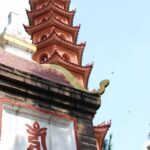
For a quieter side of Hanoi, head to West Lake (Hồ Tây) in the late afternoon and visit Trấn Quốc Pagoda just before it closes. The pagoda is generally open daily from 7:30–11:00 a.m. and 1:30–5:00 p.m., with free admission. Hanoi’s oldest Buddhist pagoda sits on a tiny island along the lake, and the late-day light reflecting off the water and its red, 11-story stupa makes this an especially beautiful time to visit.
Afterward, take a walk along the lake—nearby Trúc Bạch Lake is where John McCain’s plane went down in 1967, and a small monument marks the spot—then spend the evening wandering the West Lake neighborhood. With leafy streets, waterfront cafés, restaurants and bars, it feels calmer and more spacious than the Old Quarter and is a great place to grab dinner or a drink while the sun disappears over the lake.
Get a Massage
And/Or Other Spa treatments
Spa treatments are one of Hanoi’s great bargains. Expect to pay about $15–25 for a quality one-hour massage at a reputable Old Quarter spa, $20–30 for 90 minutes, and roughly $35–60 for a multi-hour package combining massage, scrub and facial. Even polished, tourist-friendly spas can cost a fraction of what you’d pay in the U.S. Tipping isn’t mandatory, but 50,000–100,000 VND ($2–4) for good service is appreciated unless the spa has a no-tipping policy.
Explore the Temple of Literature
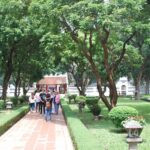
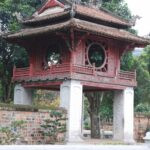
The Temple of Literature (Văn Miếu–Quốc Tử Giám) was one of my favorite sites in Hanoi. Founded in 1070 by Emperor Lý Thánh Tông, the temple was dedicated to Confucius and other scholars. Just six years later, Quốc Tử Giám—the Imperial Academy—was established here, eventually becoming Vietnam’s most important center of higher learning and commonly described as the country’s first national university. For centuries, it educated scholars and officials, and the complex remains a powerful symbol of the importance Vietnamese culture has traditionally placed on education and scholarship.
Give yourself at least an hour to wander through the complex rather than simply stopping for a photo. You pass through a series of gates and peaceful courtyards, including the beautiful Khuê Văn Pavilion, before reaching the garden containing the famous Doctors’ Stelae. These stone tablets, mounted on the backs of carved turtles, record scholars who successfully passed the notoriously difficult royal examinations; 82 surviving stelae are now recognized by UNESCO as documentary heritage. Continue through the ceremonial halls and into the former Imperial Academy area, with its traditional architecture, bell and drum towers. It feels remarkably tranquil considering the traffic and commotion waiting just outside its walls.
The Temple of Literature is a short Grab ride from the Old Quarter and is currently open daily from 8:00 a.m. to 5:00 p.m., with adult admission of 70,000 VND. There is also a separate nighttime experience on Wednesday, Saturday and Sunday evenings. I’d go early if possible, both to avoid some of the crowds and to have time to appreciate the gardens and architecture without rushing.
Visit Historical and War-Related sites
I put these all together because I think it is a good idea to do a tour and see all of the major historical and war-related sites in a day, possibly two half-days. There is so much to learn here, and some of it is a little heavy. I love traveling not just to experience luxurious hotels, flights, and eat great food, but also to learn about history, why things are the way they are, and the way the world works. This is your classroom time!
Hanoi is a particularly fascinating place for history lovers because its sights span more than a thousand years of Vietnamese history—imperial dynasties, French colonial rule, revolution and the wars of the 20th century. You don’t need to visit every museum to get a sense of it. I would concentrate on a handful of places that tell different parts of the story: the Imperial Citadel of Thăng Long, the Ho Chi Minh complex, Hỏa Lò Prison, and, if military history particularly interests you, the Vietnam Military History Museum. The Imperial Citadel is especially interesting because its history doesn’t stop with emperors; the grounds also contain D67 House and bunker, where North Vietnamese military leaders worked and met during the war.
The easiest way to see several of these efficiently is to devote one morning to the Ba Đình area. Start early at the Ho Chi Minh Mausoleum, since access to the mausoleum itself is limited to morning hours and lines can be long. We did not actually go inside and I have not had one moment of FOMO about that!
Be sure to explore the surrounding Ho Chi Minh complex-there are two other interesting stops in the Ho Chi Minh Complex that are worth a few extra minutes. The tiny One Pillar Pagoda, originally built in 1049, was designed to resemble a lotus rising from the water after Emperor Lý Thái Tông reportedly dreamed of the Buddhist bodhisattva Avalokiteshvara handing him a son. Nearby, you can see the surprisingly modest wooden stilt house where Ho Chi Minh lived and worked from 1958 until 1969. He chose the simple house beside a fishpond rather than the grand French Presidential Palace nearby—a fascinating contrast to the monumental mausoleum that now bears his name.
Then continue to the Imperial Citadel, which is close enough to make a logical next stop. Together, these sites take you from ancient imperial Hanoi through the revolutionary era and into the Vietnam War without spending half your day crossing the city.
Save Hỏa Lò Prison—the infamous “Hanoi Hilton”—for later that afternoon or another day, as it sits closer to the French Quarter and Hoàn Kiếm Lake. The prison was actually built by the French in 1896 to imprison Vietnamese political prisoners and revolutionaries; decades later, part of it was used to hold captured American pilots during the Vietnam War. The exhibits therefore tell two very different chapters of the prison’s history. Only a portion of the original complex survives today, but it is well worth seeing and deserves at least an hour or so rather than a quick photo stop.
One thing to keep in mind when visiting Hanoi’s war museums and memorials is that you are seeing the history from the Vietnamese perspective. History is written by the victors. For American visitors especially, some of the language and interpretation may be very different from the version of the war we grew up hearing. I don’t think that’s a reason to skip them—in fact, I think it’s one of the most compelling reasons to go. Understanding how another country remembers the same history can be every bit as interesting as the artifacts themselves.
Water Puppet Show???
I am going to diverge from other travelers’ recommendations here: SKIP the water puppet show. Unless, of course, you’ll have FOMO and always wonder what you missed—or you’re a puppet connoisseur on a world tour of the great puppet shows. Water puppetry is actually a fascinating centuries-old Vietnamese tradition, and I’m glad the art form is still being preserved. The puppets are clever, the live traditional music is interesting, and the skill involved is undeniable. But the famous show near Hoàn Kiếm Lake felt very much like something packaged for tourists, and about halfway through, we had absorbed all the water-puppet culture we needed for one lifetime. Hanoi has too many fascinating streets to wander, tiny cafés to discover, and bowls of bún chả to eat to spend 45 minutes wondering when the puppets are going to call it a night.
If you really want to experience the water puppet show, do it and report back! The famous one near the lake is quite convenient, but there are others that may be better. Phường Múa Rối Nước Đào Thục in Đào Thục village is a much more traditional village setting, tied to a multigenerational puppetry community, while Phan Thanh Liem Mini Water Puppetry offers a tiny, more intimate experience where the craft and mechanics are more apparent.
If you loved the water puppets, tell me! Maybe we caught them on an off night—or perhaps I just lack the cultural sophistication required to fully appreciate aquatic marionettes.
-

- Temple of Literature
-
- Party Decor Stall
-
- Tran Quoc Pagoda
-
- Cyclo Tour- Do Not Recommend
-

- Ho Chi Minh Mausoleum
-
- Temple of Literature
-

- Hoan Kiem Lake
-

- Hoan Kiem Lake
-

- Ladies Working Near Mausoleum
-

- One Pillared Pagoda
-
- Temple of Literature
-
- Everyday Life in Hanoi
What to Eat in Hanoi
How to Get Around in Hanoi
Grab is essentially Southeast Asia’s version of Uber, and it is by far our favorite way to get around Hanoi. Download the app before your trip, add a credit card, and you can order either a car or a GrabBike scooter, see the fare in advance, and avoid negotiating with drivers or trying to explain where you’re going. We used Grab almost exclusively and usually preferred the scooters—they’re ridiculously inexpensive, weave through Hanoi traffic much faster than cars, and riding through that sea of motorbikes is an experience in itself.
For the trip from Noi Bai International Airport, GrabCar is easy, your hotel can arrange a private transfer, or you can take an official taxi; Mai Linh (green taxis) is a well-established company. The airport is about 35 km/22 miles from central Hanoi, so allow roughly 35–50 minutes, and longer during rush hour.
How Many Days do you Need in Hanoi?
I always say more is better… the longer you stay, the more you “get to know” a place. With that said, most of us are working on limited vacation time and there is a lot to see and do in Vietnam. In addition, people have their preferences. Are you a city girl or guy who loves the energy and thrives on night life? History buff? Spend more time here. I would say to stay at least 3 nights, or add more if you want to do day trips from Hanoi.
Best Day Trips and Where to go Next
Scooter Tour to the ‘Burbs
We used Hanoi Motorbike Tours again and booked their Hanoi Outskirts & Rural Life Motorbike Tour
They picked us up, took us out for lunch, then we headed to villages close to Hanoi. We visited a broom making village, explored rice paddies, and visited with an elder who was extremely skilled at making bonsai trees.
Ninh Binh
If you get a chance, fit Ninh Binh into your itinerary. It is about 2 hours from Hanoi and boasts dramatic limestone karsts, rice paddies, temples and those gorgeous little boat rides through Trang An or Tam Coc. It’s often called “Ha Long Bay on land,” although I think it deserves better than being treated as Ha Long’s understudy. If you only have one day, squeeze it in, but I recommend staying longer. I’ll be posting a full guide to Ninh Binh soon, but suffice it to say that this was a magical place that I wish we’d stayed longer!
One evening, we visited Hoa Lu Ancient Town, a magical lantern-filled village in Ninh Binh that looks historic but is actually a modern cultural complex built in traditional Vietnamese style. Set along Ky Lan Lake, it comes alive after dark with glowing lanterns, tiled-roof buildings, food stalls, handicraft shops, and colorful reflections on the water. You can even take a small boat ride on the lake. It may not actually be ancient, but it’s incredibly photogenic and a fun, atmospheric way to end a day exploring Ninh Binh.
Hoa Lu Ancient Capital, on the other hand, is the real historical site. It was Vietnam’s capital from 968 to 1010, before the capital moved to what is now Hanoi. Today, visitors can explore temples dedicated to the Dinh and Early Le emperors, remnants of the old citadel, and a peaceful setting surrounded by Ninh Binh’s dramatic limestone mountains. Unfortunately, we did not know this was a totally different site, so we missed it this time. I trust you won’t make the same mistake!
Mua Cave (Hang Múa) is best known for the spectacular viewpoint above it rather than the cave itself. Climb roughly 500 steep stone steps up Ngoa Long Mountain and you’re rewarded with sweeping views over the Tam Coc rice fields, winding Ngo Dong River, and limestone karsts below. There are two summit viewpoints, including the famous stone dragon winding along the ridge. The climb is hot and sweaty, but the views are some of the best in Ninh Binh—go early or late in the day to avoid the worst heat.
Ha Long Bay
Ha Long Bay is about 2½–3 hours from Hanoi, making it an easy overnight side trip. I strongly recommend a 2-day/1-night cruise rather than spending most of a day driving there and back; most cruise companies offer transfers from Old Quarter hotels, so the logistics are simple. If you’re returning to the same Hanoi hotel afterward, ask them to store your large luggage overnight (usually no problem) and take only a small bag on the boat. You’ll get sunset and sunrise among those spectacular limestone karsts—and wake up in Ha Long Bay instead of spending five hours of your day in a van.
Take the Overnight Train to Sa Pa
Taking the overnight train in Vietnam is an experience I highly recommend!
The classic way to get from Hanoi to Sapa is the overnight sleeper train, although technically it only goes as far as Lao Cai, about an hour by car from Sapa. Trains leave Hanoi around 10 p.m. and arrive around 6 a.m., so you save a hotel night and wake up ready to head into the mountains. (Sapa Nomad)
The confusing part is that names like Chapa Express, Sapaly Express, Laman Express and King Express aren’t actually separate trains—they operate upgraded private carriages attached to Vietnam Railways trains. Expect a somewhat old-school, rocking-and-rattling sleeper-train experience, not Orient Express luxury, even when the cabin is labeled “luxury.” (Vietnam Train Tickets)
For most travelers, I’d recommend Chapa Express or Sapaly Express, preferably a private 2-berth cabin if you’re traveling as a couple. Chapa is a particularly good all-around choice and has a lounge at Lao Cai; Sapaly is a little more polished. (Sapa Nomad)
And I’d definitely mention: the train does NOT take you all the way to Sapa, so arrange the Lao Cai → Sapa transfer ahead of time rather than figuring it out half-awake at 6 a.m. (Sapa Nomad)
We have done this twice and thoroughly enjoyed the journey. While the rocking of the train is somewhat irregular, but it still lulled me to sleep.
-

- Kayaking in Ha Long Bay
-

- Overnight Train
-

- Ninh Binh
What I’d Tell a Friend Going to Hanoi
My friends, I would tell you not to be intimidated and to get into the thick of it. The Vietnamese people are kind and helpful, and you will find interesting things around every corner.
Crossing the street: A tour guide once told me to close my eyes and walk at a steady pace to cross the street… I did not quite have the nerve to close my eyes… but walking at a steady pace is key. Find a slight lull and begin to step into the street. Do not run, do not pause, do not visibly freak out. Just walk. Like a school of fish, the scooters (and occasional cars) will flow around you. If you move at a steady pace, drivers can anticipate exactly where you will be when they get to you. It is terrifying, exhilarating, and a true Hanoi experience.
You will always hear about scams- any time I am traveling internationally, friends and family warn me about this… honestly, I often feel safer traveling internationally than I do here in the US. The same advice applies to Hanoi as anywhere else in the world- be alert! Be aware of your surroundings. Don’t be paranoid, but don’t be naive either.
Be vigilant without making a ton of eye contact, and trust your gut. If you feel like someone is following you, duck into a crowded store or market. Keep your bag in front of you and keep your hand on it. Don’t brandish your phone, for goodness’ sake don’t wear expensive jewelry, and leave your passport in the hotel safe. Travel with a modest amount of cash and one credit card and leave the rest in your safe.
Have you seen the show “Psych?” Do what Shawn does- see everything around you and pay attention to details.
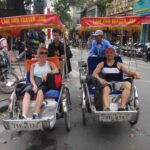
Hanoi is generally very safe, and most tourist “scams” are more annoying than dangerous. Use Grab instead of random taxis, agree on prices before accepting anything, and be wary of shoe shiners, cyclo drivers, or street vendors who start a service before telling you the cost. Watch your Vietnamese bills—some denominations look surprisingly similar—and always check your change and restaurant bill. Use ATMs attached to reputable banks, choose to pay in VND rather than USD when given the option, and keep phones and bags secure near the street to avoid scooter snatch-and-grabs. Don’t be paranoid—just don’t be passive.
Next Stop… Sa Pa
Hanoi is chaotic, colorful, delicious, and endlessly fascinating—a city where ancient temples, tiny coffee shops, tangled streets, and a sea of scooters somehow all work together. Give yourself time to wander, eat everything, and embrace the beautiful disorder rather than trying to conquer it all.
Next, we’re trading Hanoi’s traffic and tropical heat for misty mountains, terraced rice fields, and cooler air as we head north to Sapa, one of Vietnam’s most dramatically beautiful regions.

0 Comments