
Introduction
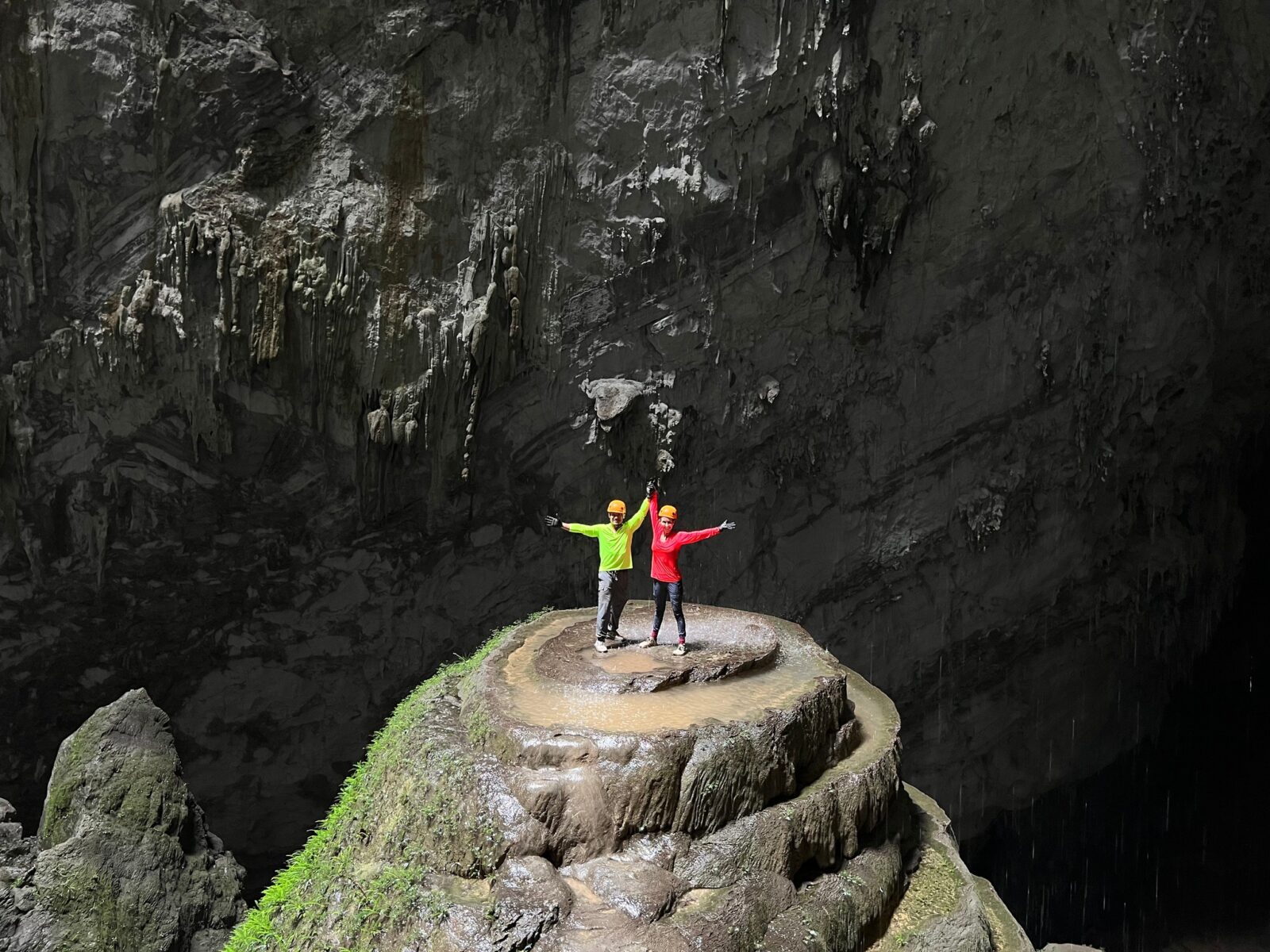
We came to Phong Nha for one very specific reason: Son Doong Cave.
Known as Vietnam’s adventure capital, Phong Nha is a place of jungle-covered limestone mountains, underground rivers, and hundreds of caves—including the largest cave in the world, Hang Son Doong. If you haven’t figured it out yet, hang means cave in Vietnamese.
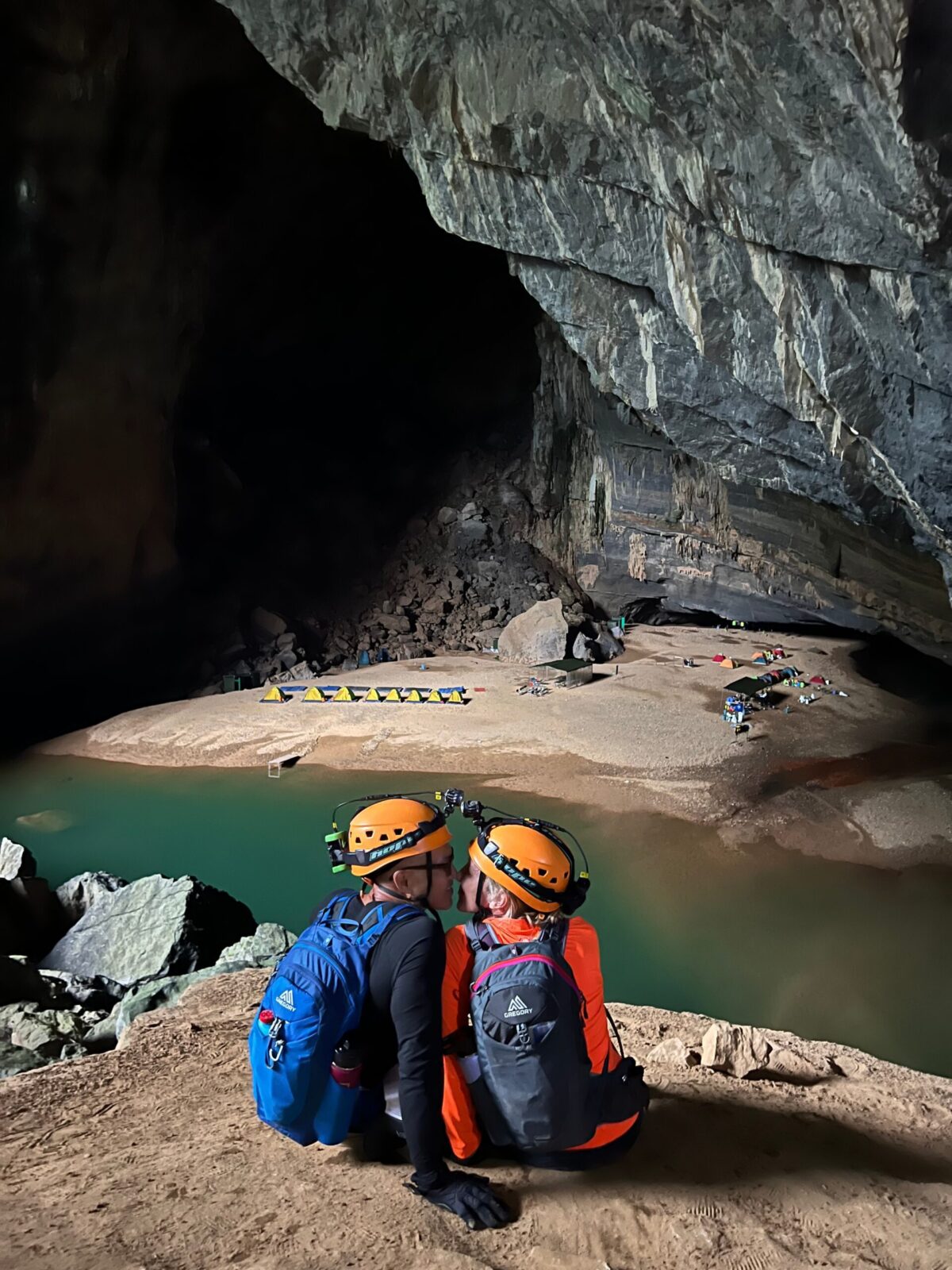
Vuong and I traveled here in 2023 to spend several days trekking through the jungle, crossing rivers, scrambling over rocks, camping underground, and exploring Son Doong. It was one of the biggest adventures we’ve ever undertaken, and it was unreal. Read all about it here. We had read about this cave for years but thought we were not strong enough, athletic enough, crazy enough… then something changed and we became strong enough, athletic enough, and crazy enough! Now, our philosophy is to do the difficult stuff before we get too old and cannot do it!
Here’s what surprised me: you don’t have to be remotely that crazy to love Phong Nha.
You can experience Phong Nha at whatever level of adventure suits you. Take a leisurely boat ride into a cave. Walk along a developed path beneath enormous stalactites. Kayak or swim through an underground river. Hike through the jungle for a day. Camp inside a cave overnight.
Or do what we did and disappear underground for several days. (Do it. You know you want to. Just do it)
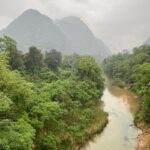
Phong Nha village itself is small, charming, and just touristy enough to make traveling easy, with restaurants, cafés, hotels, homestays, and outfitters catering to travelers who have come for the caves. But drive or bicycle a few minutes out of town and you’re back among rice paddies, rivers, farms, jungle, and those enormous limestone mountains.
And underneath those mountains?
That’s where things get really interesting.
Phong Nha at a Glance
Where: Central Vietnam, in Quang Binh Province. Phong Nha village sits along the Son River and is the gateway to Phong Nha–Ke Bang National Park.
Known for: Caves. Really, really big caves. Phong Nha is known as Vietnam’s adventure capital and is home to hundreds of caves and underground rivers, including Son Doong, the largest known cave in the world.
Best for: Caving, hiking, jungle trekking, kayaking, swimming, cycling, photography, and anyone who likes a little—or a lot—of adventure.
How long to stay: I’d give Phong Nha at least 2–3 days, and longer if you’re doing an overnight cave trek. Serious expeditions can add several days all by themselves.
Best time to visit: Generally March through August for the most reliable conditions for caves and outdoor adventures. Heavy rains can affect cave access, particularly from September into November, so check conditions before planning a cave-heavy itinerary.
Where to stay: Phong Nha village is the easiest base, with small hotels, homestays, restaurants, cafés, tour operators, and beautiful views along the Son River. You can also stay farther out in the countryside if you want more peace and scenery.
Don’t miss: At least one cave! Phong Nha Cave and Paradise Cave are among the easiest to experience, while more adventurous travelers can choose from jungle treks, kayaking, swimming, overnight cave camping, and multi-day expeditions.
UNESCO status: Phong Nha–Ke Bang National Park is part of a UNESCO World Heritage Site protecting one of the world’s most extraordinary limestone karst landscapes. Its cave systems and underground waterways have been developing for hundreds of millions of years.
What makes it special: You get to choose your own level of crazy. You can float peacefully into a cave on a boat, stroll through an enormous cavern on a developed walkway, hike through the jungle, swim through underground rivers—or spend days trekking to some of the wildest caves on Earth.
*Jennifer’s Tip*: Don’t skip Phong Nha because you think it’s only for hardcore adventurers. We came here to trek Son Doong, which was definitely on the extreme end of the spectrum, but you can experience some absolutely spectacular caves here without doing anything remotely that intense.
Why Visit Phong Nha?
If you like adventure, caves, scenery, the outdoors… Phong Nha is one of the coolest places in Vietnam.
The caves are obviously the stars. More than 300 caves and underground rivers have been identified in the region, ranging from caverns you can explore on an easy walk or boat ride to enormous cave systems that require days of trekking through the jungle just to reach them. And then there is Son Doong—the largest known cave in the world.
But what makes Phong Nha so much fun is that you get to choose your own level of adventure.
You can take a peaceful boat ride into Phong Nha Cave, walk along boardwalks through the spectacular formations of Paradise Cave, kayak or swim into a cave, zipline over a river, hike through the jungle, or sign up for a serious expedition involving river crossings, climbing, swimming, camping underground, and several days of mud, sweat, leeches, and deferred personal hygiene.
We obviously chose that last option.
We came to Phong Nha specifically to trek Son Doong, and it remains one of the most extraordinary things Vuong and I have ever done. Read on to find out how and why to do this… But spending time here made me realize that Phong Nha isn’t just a destination for hardcore adventurers. You can have an incredible cave experience here without sleeping underground or carrying hiking poles.
And don’t forget to look above ground. Phong Nha-Ke Bang is gorgeous—jungle-covered limestone mountains, winding rivers, rice fields, tiny country roads, and a cute little riverside village that has become touristy enough to be easy and fun without completely losing its charm.
The geology is pretty incredible, too. These limestone karsts have been developing for around 400 million years, making this the oldest large-scale karst system in Asia. Beneath them lies an enormous network of caves and underground waterways that is still being explored today.
Come for the caves. Stay for the jungle, rivers, countryside, and the chance to do something that pushes you just a little—or a whole lot—outside your comfort zone.
*Jennifer’s Tip*: Don’t look at photos of Son Doong and decide Phong Nha isn’t for you. You absolutely do not have to spend days trekking through the jungle and sleeping in caves to experience this place, although I highly recommend it. Pick your own level of crazy. There’s plenty here for everyone.
Where to Stay in Phong Nha
For a first visit, I’d stay in or very close to Phong Nha town.
Phong Nha isn’t a big place, and staying near town means you can walk to restaurants, cafés, tour operators, and the boat landing for Phong Nha Cave. Better yet, find somewhere that provides bicycles. The countryside around Phong Nha is gorgeous, and a bike gives you the best of both worlds: you can stay close to the action but pedal into rice fields, villages, and karst scenery whenever you feel like exploring.
If you book a multi-day trek with an outfitter like Oxalis Adventures, they will likely arrange your accommodations like they did for us.
Where We Stayed: Commander Lodge
Before our Son Doong expedition, we stayed at Commander Lodge, formerly known as Son Doong Bungalow, and I think it’s a great choice for a first visit. It’s in Phong Nha town but slightly removed from the busiest part of the main strip, with mountain and river views, a pool, breakfast, and—importantly—free bicycles.
That combination is exactly what I’d look for here. You don’t need transportation every time you want dinner, but you can grab a bike and explore beyond town whenever you want.
After the Cave: Chay Lap Farmstay
After Son Doong, we switched gears and stayed at Chay Lap Farmstay, outside town near the national park.
This is a completely different experience—and a lovely one. Instead of being able to stroll into town, you’re surrounded by countryside and much closer to nature. There are pools, a restaurant, bicycles, kayaking and other outdoor activities right at the property.
Chay Lap currently gives guests complimentary bicycle use and also rents mountain bikes and e-bikes, so it’s particularly good if exploring the countryside on two wheels appeals to you.
For us, it was a wonderful place to decompress after several days underground.
A Few Other Places I’d Look At
If you want something a little more upscale while still staying in Phong Nha village, Victory Road Villas looks excellent. It’s a small boutique property overlooking the Son River with spacious villas, a pool, restaurant, mountain and river views, and bicycle rentals.
For something smaller and more local, Funny Monkeys Homestay is right along the Son River, within walking distance of the center, and provides free bicycles. Phong Nha Banana’s Homestay is another highly rated family-run option with free bikes, rice-field views, and easy access to town. You can stay at either of these for pennies… they don’t seem to maintain websites, but don’t worry about that 🙂
- Funny Monkeys Homestay — book through Booking.com or Agoda. Google Hotels currently shows both as booking options. They also appear to take direct bookings by phone/WhatsApp at +84 915 602 410. Current listings show rooms around $19–26/night.
- Phong Nha Banana’s Homestay — Agoda definitely has live 2026 inventory, and current verified reviews include stays as recent as June 2026. Agoda is showing an average around $18/night, although actual rates depend on dates and room. They can also be contacted directly at +84 705 953 788.
And if the idea of waking up surrounded by rice paddies appeals to you more than walking to dinner, there are plenty of countryside homestays and farmstays outside town. Phong Nha Farmstay is one of the best-known options, set among rice fields away from the village.
Town or Countryside?
I’d make the decision based on how you want to spend your evenings.
Stay in town if you want to walk to dinner, wander around, meet other travelers, and have tour operators and transportation close at hand.
Stay in the countryside if you want rice fields, mountain views, quiet mornings, and don’t mind using a bicycle, scooter, or arranged transportation to get around.
Jennifer’s Tip: For your first visit, I’d choose Phong Nha town and a hotel with bikes. This is one of those places where you don’t want to spend your entire trip being driven from attraction to attraction. Grab a bicycle, get off the main road, and explore. Some of the prettiest parts of Phong Nha are the places between the caves.
Best Things to Do in Phong Nha
Let’s be clear: you come to Phong Nha for the caves.
But “going to a cave” can mean very different things here. You can float peacefully into one on a boat, stroll through another on a wooden walkway, kayak through an underground river, swim through a cave, or hike through the jungle and spend the night underground.
This really is a choose-your-own-adventure destination.
And while the caves get most of the attention, don’t spend your entire visit underground. Phong Nha is gorgeous above ground, too, with jungle-covered mountains, turquoise rivers, rice fields, country roads, swimming holes, and little villages that are perfect for exploring by bicycle.
1. Take a Boat into Phong Nha Cave
This is the classic Phong Nha experience and one of the easiest ways to see what all the cave fuss is about. Boats leave from Phong Nha town and travel along the Son River before entering the cave itself.
Once inside, the engine is turned off and the boat is paddled quietly through the cavern beneath stalactites and enormous rock formations. It’s a great choice if you want an impressive cave experience without trekking, swimming, mud, or sleeping underground.
2. Explore Paradise Cave
Paradise Cave (Thien Duong Cave) is one of the most spectacular caves you can visit without signing up for an expedition.
The cave stretches for more than 30 kilometers, although most visitors explore the first kilometer along a wooden walkway. The cavern is enormous, filled with stalactites and stalagmites, and beautifully illuminated so you can actually appreciate the formations.
There is a climb to reach the cave entrance, but once you’re inside, this is a relatively easy way to experience one of Phong Nha’s extraordinary underground worlds.
If that’s not adventurous enough, there are also longer guided experiences that venture much deeper into the cave.
3. Get Wet and Muddy at Dark Cave
If Paradise Cave is the beautiful one, Dark Cave is the playground.
The Chay River–Dark Cave experience combines several activities into one adventure. Depending on the package and conditions, you can zipline across the river, kayak, swim into the cave, explore by headlamp, and wallow around in a natural underground mud bath.
You’re going to get wet. You’re probably going to get dirty. That’s the point.
4. Take an Adventure Cave Trek
There is a huge middle ground between strolling along a boardwalk and committing to one of Phong Nha’s most extreme expeditions.
Guided trips explore caves such as Hang En, Hang Va and Nuoc Nut, as well as the Tu Lan cave system farther from Phong Nha. Depending on the trip, you might hike through jungle, cross rivers, scramble over rocks, swim through caves, camp overnight, or descend deeper underground.
Trips range from adventurous day hikes to multi-day expeditions, so this is where you can really choose your own level of crazy.
5. Bicycle Through Bong Lai Valley
Eventually, come back above ground and get on a bicycle.
Bong Lai Valley is a beautiful rural area outside Phong Nha filled with rice paddies, farms, villages, limestone mountains, and quiet country roads. It’s a great place to spend a few hours cycling without a particular agenda.
And yes, there really is a place called The Pub With Cold Beer, famous among travelers for cold beer, freshly grilled chicken, and peanut sauce. Sometimes an attraction doesn’t need to be complicated.
6. Swim at Nuoc Mooc Eco Trail
Nuoc Mooc is a lovely break from caves and trekking, with brilliant blue-green water surrounded by forest.
Wooden walkways wind through the landscape, and depending on conditions and what’s open, you can swim, kayak, relax beside the water, or simply wander through the forest.
If you’ve spent the previous day crawling around underground, this can be a very pleasant change of pace.
7. Explore Phong Nha Village and the Son River
Don’t schedule every minute of your stay.
Phong Nha village is small, increasingly touristy, and really quite charming. Walk along the Son River, find somewhere to eat, grab a beer, watch the boats come and go, and enjoy the mountains rising behind town.
Better yet, borrow one of those bicycles I keep telling you to look for when you book your hotel and start riding. Within minutes, you can leave the tourist strip behind and find yourself among rice fields, farms, villages, and limestone mountains.
8. Visit the Phong Nha Botanical Garden
Despite the name, this isn’t a manicured botanical garden filled with labeled flower beds. Phong Nha Botanical Garden is a protected area of tropical forest within the national park, with walking trails through the jungle.
Trails lead past native plants and enormous trees to places such as Gio Waterfall, and longer routes take you deeper into the forest. It’s a good option if you want to hike and experience the national park above ground rather than spending yet another day inside a cave.
*Jennifer’s Tip*: Don’t try to do everything. Pick one easy spectacular cave, one more adventurous experience, and at least one day or half-day above ground. Phong Nha isn’t a checklist. Leave yourself enough time to grab a bicycle, follow a country road, stop for a cold beer, and see where you end up.
9. Son Doong: The Ultimate Phong Nha Adventure
And then there’s Son Doong.
This is the reason we came to Phong Nha in the first place.
Hidden deep inside Phong Nha-Ke Bang National Park, Hang Son Doong is the largest known cave in the world by volume. It wasn’t officially discovered until 1990, when a local man named Ho Khanh stumbled across the entrance while seeking shelter in the jungle. He couldn’t find it again for years. Eventually, he relocated the entrance and returned with a team of British cave explorers, who surveyed the cave in 2009.
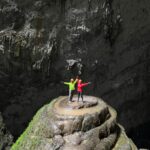
The dimensions are difficult to wrap your head around until you’re standing inside it. Sections of the cave are more than 200 meters high and 150 meters wide, large enough to fit a city block—or a 40-story building—inside. An underground river runs through it, and enormous sections of the ceiling have collapsed over time, creating giant openings called dolines where sunlight pours into the cave and entire jungles grow hundreds of feet underground.
This is not a cave tour.
Reaching Son Doong requires trekking through the jungle, crossing rivers, scrambling over rocks, climbing and descending with ropes and harnesses, and spending several nights camping underground. We spent our first night on the trek in Hang En, the third largest cave in the world. The expedition is strictly controlled, group sizes are small, and Oxalis Adventure is the only operator permitted to take travelers into Son Doong.
Vuong and I did the expedition in 2023.
We knew it was going to be hard. We trained for it. We read everything we could find. We bought the gear. We knew we’d be trekking for days, sleeping in tents inside caves, crossing underground rivers, and eventually climbing the famous Great Wall of Vietnam to get back out.
Knowing all of that and actually doing it turned out to be two very different things.
There were moments that were physically exhausting, moments that were uncomfortable, moments that were absolutely surreal, and moments when I had to stop and remind myself where I was.
We were standing inside a place that relatively few human beings had ever seen.
And it was magnificent.
What the Son Doong Expedition Is Really Like
This is where I’m going to depart from the usual travel-guide information and tell you what it was actually like for us—the good, the difficult, the ridiculous, and the things I wish I’d known before we disappeared into the jungle.
Vuong and I first learned about the world’s largest cave years earlier, and at the time it seemed completely beyond anything we were capable of doing. But after hiking the Inca Trail and becoming progressively more adventurous—and probably a little crazier—we decided that if we were ever going to do it, we should do it while we were still young and strong enough.
We originally booked the expedition for March 2020.
You can probably guess how that worked out.
After three COVID postponements, we finally arrived in Phong Nha in 2023, three years older but also stronger, more experienced, and very ready to finally do the thing we’d been talking about for years.
So What Exactly Is Son Doong?
Hang Son Doong is the largest known cave in the world by volume, hidden deep inside Phong Nha-Ke Bang National Park. Parts of it are more than 200 meters high and 150 meters wide. An underground river runs through it, and enormous sections of the ceiling have collapsed, allowing sunlight to pour in and actual jungles to grow hundreds of feet underground.
Getting there is an adventure before you ever set foot inside the cave.
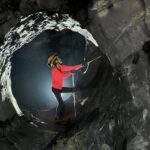
Our expedition lasted six days and five nights, including three nights camping underground: one in Hang En and two in Son Doong. We trekked through muddy jungle, crossed rivers over and over again, scrambled across slippery rocks, descended into caves using ropes and harnesses, climbed, crawled, got soaked, got muddy, acquired a few leeches, and discovered just how long human feet can remain wet before you start wondering whether they’re permanently going to look like that.
And that was before we had to climb the Great Wall of Vietnam to get back out.
Was It Hard?
Yes.
But maybe not in the way I expected.
There were stretches that were extremely physically demanding, but for me the hardest parts were often psychological. Heights bother me much more than exertion does, and backing down a steep, wet cliff while attached to a rope required considerably more conversation with myself than hiking another mile ever would.
The expedition challenged strength, balance, flexibility, grip, endurance, and occasionally my willingness to look down.
But then we’d walk into another enormous chamber, see a beam of sunlight falling hundreds of feet through the ceiling, climb past formations that looked like they belonged on another planet, or stand beneath an underground jungle and remember:
We were inside Son Doong.
And It Wasn’t All Suffering
This is something the dramatic expedition photos don’t really show.
There were enormous meals prepared by our crew, campfires inside caves, laughter, games, banana-wine toasts, and evenings spent getting to know our fellow trekkers and the Vietnamese team taking care of us. At one campsite, we even had portable steam saunas scented with lemongrass and ginger. Most of our companions were Vietnamese, and they helped me learn a few phrases, we sang songs, and even braided each other’s hair!
Yes. A sauna. Inside a cave.
The Oxalis guides, safety assistants, porters, and chefs were an enormous part of the experience. Their skill and attentiveness allowed us to do things I would never have dreamed of attempting on my own, and the people became almost as memorable as the cave itself. Honestly, Oxalis is almost a one-stop shop for adventure in Phong Nha—they offer everything from day trips to multi-day expeditions for a range of skill levels. They are excellent stewards of the environment, well-trained and extremely safety conscious, and really nice.
Son Doong was beautiful, exhausting, intimidating, filthy, surreal, and unlike anything else we’ve ever done.
And I would do it again.
Want the whole muddy, leechy, occasionally terrifying story? I wrote a separate account of our entire expedition, including what we packed, how we trained, what the camps were like, the infamous Great Wall of Vietnam, and what it’s really like to spend several days inside the largest cave on Earth.
-
- The Jungle Near Phong Nha
-
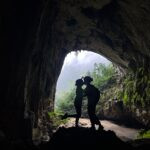
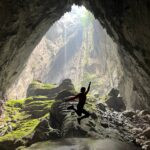
- Son Doong
-
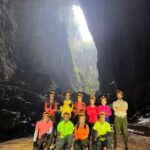
- Our Group
What to Eat in Phong Nha
One thing we noticed almost immediately in Phong Nha was the amount of Western food. For such a small Vietnamese town, there are an impressive number of places serving pizza, burgers, pasta, pancakes, and other backpacker favorites.
After several days trekking through caves, I’m certainly not going to judge anyone for wanting a pizza and a cold beer.
But don’t eat Western food for your entire stay. Phong Nha is in the former Quang Binh Province, which has some excellent regional specialties of its own.
Grilled Chicken with Muối Cheo
If you try one local meal, make it gà nướng chấm muối cheo—charcoal-grilled chicken served with sticky rice and a wonderfully salty, spicy, herby dipping mixture called muối cheo.
This is particularly associated with the Phong Nha area and is exactly the sort of meal that works after a day of hiking, swimming, and crawling around caves. Order a whole chicken for the table, grab a cold beer, and dig in.
Cháo Canh
Despite the name, this isn’t porridge. Cháo canh is a Quang Binh specialty made with thick, chewy noodles in a savory broth with fish, shrimp, pork, or some combination of the above.
It’s particularly popular for breakfast or lunch and is exactly the kind of simple local dish worth seeking out instead of automatically ordering another bowl of pho.
Bánh Lọc
These little translucent, chewy dumplings are made from tapioca starch and usually filled with shrimp and pork, often steamed inside banana leaves and served with fish sauce.
You’ll find variations throughout central Vietnam, but Quang Binh has its own version, making this an easy local snack to add between adventures.
Bánh Khoái
If you like bánh xèo, look for bánh khoái. It’s a crispy rice-flour pancake filled with ingredients such as shrimp, pork, and bean sprouts and eaten with herbs, rice paper, and dipping sauce.
Crispy, messy, and delicious. My kind of food.
Fish from the Son River
That beautiful river running through Phong Nha also provides dinner.
Cá trắm from the Son River is a local specialty and may be steamed, grilled, braised, or cooked with pickled vegetables. If you see a restaurant filled with Vietnamese diners sharing whole fish and plates of vegetables around a table, that’s probably where I’d be heading.
And Yes, Eat the Pizza
Phong Nha is an adventure town filled with travelers who have spent their day hiking, kayaking, swimming, climbing, and getting filthy underground. Consequently, it has developed quite the international food scene.
Enjoy it.
Have the Vietnamese food. Try the local chicken. Eat the river fish. But if you emerge from a cave after eight hours and what your heart truly desires is a cheeseburger, fries, and a cold beer, this is not the place where I’m going to tell you you’re traveling wrong.
*Jennifer’s Tip*: Get away from the most tourist-oriented menus at least once. Look for a busy local place, order a few dishes for the table, and try the grilled chicken with muối cheo. Phong Nha may cater heavily to international travelers, but there is still plenty of Quang Binh on the plate.
How to Get Around Phong Nha
Honestly? Bikes were pretty much all we needed.
Phong Nha town is small and easy to walk, but a bicycle gives you the freedom to get out into the surrounding countryside—and that’s half the fun of being here. Many hotels and homestays provide bikes for free or rent them very cheaply, which is one reason I recommend looking for a place that has them.
We used bikes to explore around town and the countryside, riding past rice fields, farms, villages, the Son River, and those gorgeous limestone mountains. The terrain close to town is relatively flat, and traffic is nothing like Hanoi or Saigon. You can just get on a bike and wander.
For farther-flung attractions such as Paradise Cave, Dark Cave, or the Botanical Garden, you’ll probably want a scooter, taxi/private driver, or organized tour unless you’re a serious cyclist. Many cave tours and adventure excursions include transportation anyway, so you may find that you don’t need to arrange much transportation yourself.
Scooters are widely available if you’re comfortable riding one, but don’t feel like you need one just because you’re in Vietnam. And unlike the major cities, don’t count on Grab in Phong Nha.
*Jennifer’s Tip*: Stay in town somewhere with free bikes. We did, and they were really all we needed for our independent exploring. Phong Nha is a place where getting around slowly is part of the appeal—grab a bike, head toward the countryside, and see where the road takes you.
How Many Days Do You Need in Phong Nha?
How long you need in Phong Nha really depends on how adventurous you plan to get.
If you aren’t doing a multi-day cave expedition, I think 2–3 full days is about right. That gives you enough time to see one or two of the major caves, do something a little more adventurous if you want, and still have time to bicycle through the countryside, swim, or simply enjoy Phong Nha village.
With two days, you can hit the highlights. With three, you can slow down a little—and you know which option I’m going to recommend.
If you’re doing an overnight or multi-day cave trek, build your trip around the expedition and add at least a little time on either side. Some adventures take one or two nights, while the biggest expeditions can consume the better part of a week.
And don’t schedule yourself to leave five minutes after you crawl out of a cave.
After Son Doong, we stayed at Chay Lap Farmstay, showered off several days’ worth of cave and jungle, pulled off a couple of remaining leeches, and gave ourselves some time to rejoin civilization. I highly recommend the reentry period.
*Jennifer’s Tip*: If you’re not doing an expedition, give Phong Nha 2–3 days. If you are, add your expedition days on top of that if your itinerary allows. Phong Nha deserves some time above ground, too. For the Son Doong expedition, a day before and after the cave above ground is included, but I wish we had stayed 1 or 2 more nights so we could have checked out some of the other caves.
Where to Go After Phong Nha
If you’re traveling south through Vietnam, Hue is the natural next stop—and that’s the route we took.
We hired a private driver from Phong Nha and headed south toward Hue before continuing on to Da Nang. Our new French friend Jerome, whom we’d just spent several muddy, exhausting, hilarious days with inside Son Doong, joined us for the ride as far as Hue. One of my favorite things about adventure travel is how quickly strangers become friends when you’ve been through something slightly ridiculous together.
We didn’t have time to properly explore Hue on this particular trip, but we did make one very important stop: bún bò Huế.
Our driver pulled over at a ramshackle little roadside stand where we sat down for a bowl of the city’s famous spicy beef noodle soup. In Hue, you can simply call it bún bò—you’re already in Hue, after all.
It was the best bún bò Huế I’ve ever had.
Sometimes the memorable meal isn’t the restaurant you researched for weeks. It’s the plastic-chair, roadside place you never could have found again if you tried.
Hue: Come Back and Give It Some Time
Although we only passed through Hue on that particular trip, I returned later and absolutely loved it.
Hue was Vietnam’s imperial capital, and the Imperial City alone makes it worth a stop. I loved wandering through the old palace complex, with its gates, courtyards, temples, and remnants of the Nguyễn Dynasty.
The incense village is colorful, charming, and ridiculously photogenic. It’s also decidedly touristy—but sometimes touristy things are touristy because they’re fun. Go, take the pictures, and enjoy it.
I also loved Hue’s local markets, which felt very… local.
My mother-in-law had a particularly good time haggling over durian with the women in the market, who seemed considerably more interested in fussing over how beautiful she was than they were in negotiating the price. Watching her banter with the local ladies was probably as much fun as anything we officially went there to see.
So don’t do what we did on our first pass through and give Hue only enough time for lunch. Give it at least a couple of days. There’s history, fantastic food, royal tombs, pagodas, markets, and plenty of everyday Vietnamese life mixed in with the major sights.
Take the Hai Van Pass to Da Nang
From Hue, continue south toward Da Nang, but don’t automatically take the fastest route.
We had our driver take us over the Hai Van Pass, the spectacular mountain road between Hue and Da Nang. Its name translates roughly to “Ocean Cloud Pass,” and the road winds high above the coast with views of mountains, sea, and Lang Co Bay before eventually descending toward Da Nang.
The faster route uses the Hai Van Tunnel. Unless you’re in a hurry or the weather is terrible, take the pass. Stop at the viewpoints, take some pictures, and let the transfer itself become part of the trip.
From Da Nang, you can easily continue to Hoi An, making a fantastic Central Vietnam route:
Phong Nha → Hue → Hai Van Pass → Da Nang → Hoi An
*Jennifer’s Tip*: Don’t think of travel days as wasted days. Hire a driver, take the scenic route, eat bún bò at a questionable-looking roadside stand, stop when something catches your attention, and make the journey part of the trip. Some of my favorite travel memories happen between the places I thought I was going to see.
-

- Top of Hai Van Pass
-
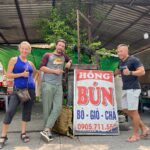
- Bun Bo Hue with Jerome
What I’d Tell a Friend Going to Phong Nha
Go there. Even if you aren’t a hardcore adventurer. Even if you have absolutely no intention of sleeping underground or dangling from a rope. The caves are spectacular, the countryside is beautiful, the little town is fun, and there is an adventure here for almost everyone.
If you are adventurous, though? Do Son Doong.
And train for it.
Don’t just get on a treadmill and assume you’re ready. Do squats, Bulgarian split squats, curtsy squats, lunges, step-ups, and anything else that builds strong legs, balance, and stability. Work on your grip strength. Hike on uneven terrain. Get comfortable going up and down steep hills. The challenge isn’t simply walking a long distance—it’s scrambling over rocks, negotiating slippery terrain, crossing rivers, climbing, descending, and doing it again the next day.
But some of my best advice for Phong Nha has nothing to do with fitness.
Be open.
Be open to doing something that scares you a little. Be open to getting muddy and wet and uncomfortable. And especially, be open to the people you meet along the way.
Some of our favorite memories from Son Doong aren’t just of the enormous caverns and underground jungles—they’re of the people we shared them with. Jerome, our new French friend, ended up piling into the car with us when we left Phong Nha for Hue. And the friendships didn’t necessarily end when the expedition did. The next time Vuong was in Saigon, he met up with Ngoc and Duong, a couple we’d met on the trek.
There’s something about spending several days dirty, exhausted, underground, and completely outside your normal life that turns strangers into friends remarkably quickly.
And when you aren’t underground, get on a bike.
Ride through town. Follow a little road past the rice fields. Stop when something looks interesting. Eat somewhere you hadn’t researched. Have a cold beer. Talk to people. Don’t spend every minute rushing from one attraction to the next.
Phong Nha rewards curiosity.
Come for the caves, absolutely. But leave yourself enough room for the unexpected experiences—and unexpected people—you find between them.
That’s usually where the good stuff is anyway.

0 Comments