
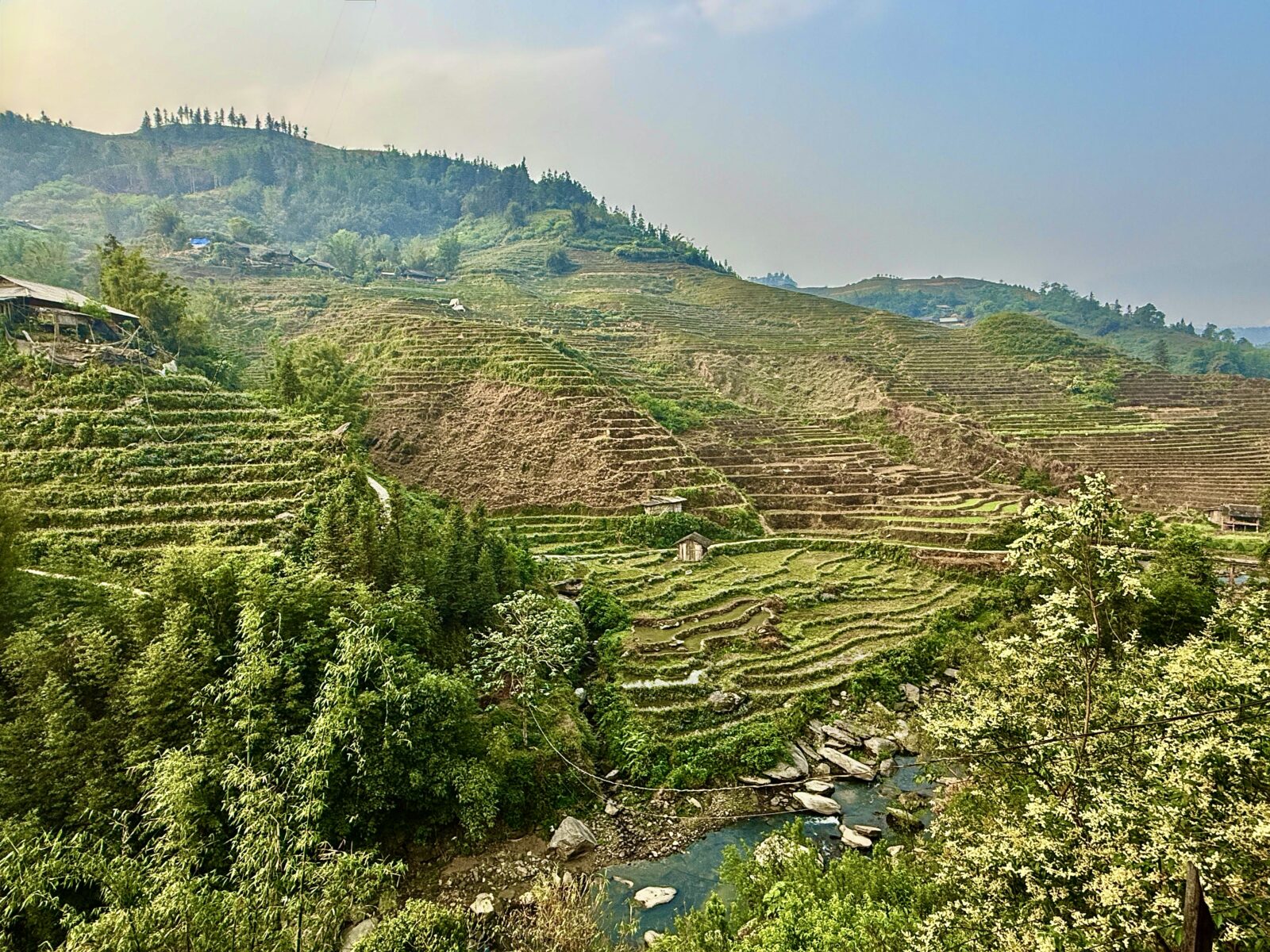
Short answer…Yes!
Introduction
Tucked high in the Hoàng Liên Sơn Mountains of northern Vietnam, Sa Pa is a misty mountain town surrounded by dramatic peaks, cascading rice terraces, waterfalls, and tiny villages. Located in Lào Cai Province near the Chinese border, the greater Sa Pa area is home to roughly 80,000 people, including several ethnic minority groups such as the Hmong, Dao, Tày, and Giáy.
At around 1,500 meters (5,000 feet) above sea level, Sa Pa feels worlds away from the heat and chaos of Hanoi. It’s one of Vietnam’s best destinations for trekking, with trails winding through the spectacular Muong Hoa Valley and surrounding villages. It’s also the gateway to Fansipan, the 3,143-meter (10,312-foot) “Roof of Indochina” and the highest mountain in Vietnam.
For travelers looking beyond Vietnam’s cities and beaches, Sa Pa offers something completely different: cool mountain air, incredible scenery, fascinating cultures, and some of the most beautiful landscapes in the country.
-
- Bridge in Cat Cat Village, 2017
-

- Bridge in Cat Cat Village 2026
-

- Cat Cat Village 2017
-

- Cat Cat Village 2026
-
- Sa Pa 2017
Sa Pa at a Glance
Where: Lào Cai Province, northern Vietnam, near the Chinese border
Best for: Mountain scenery, rice terraces, trekking, photography, and cultural experiences
How long to stay: 2–3 nights; 3 nights is ideal if you want time for both trekking and Fansipan without rushing
Best time to visit: March–May and September–November for generally pleasant trekking weather. September is especially beautiful when the rice terraces turn golden before harvest.
Elevation: About 1,500–1,650 meters (4,900–5,400 feet) above sea level
Getting there: From Hanoi, take an overnight train to Lào Cai followed by about a one-hour drive to Sa Pa, or travel directly by bus or private car. There is no airport in Sa Pa.
Don’t miss: riding scooters around the area, trekking through Muong Hoa Valley, visiting the surrounding ethnic minority villages, and taking the cable car up Fansipan, the highest mountain in Vietnam
What to pack: Comfortable hiking shoes, layers, rain protection, sunscreen, and a light jacket—even when the rest of Vietnam is hot
Good to know: Sa Pa can be cool, wet, foggy, and muddy. The weather changes quickly, so don’t count on clear mountain views every day.
Ideal for first-time visitors? Yes—especially if you want to experience a more rural and mountainous side of Vietnam in addition to Hanoi and the country’s coastal destinations.
Why Visit Sa Pa?
We’ve visited Sa Pa twice—once on our very first trip to Vietnam and again on our most recent—and there’s a reason we wanted to go back.
Sa Pa offers a side of Vietnam that feels completely different from the country’s bustling cities and tropical coastline. Here, the landscape is all mountains, deep valleys, waterfalls, and rice terraces cascading down impossibly steep hillsides. Some of my favorite memories are simply walking through the countryside, surrounded by scenery that seems to get more dramatic around every corner.
But Sa Pa is about more than beautiful views. The surrounding mountains are home to Hmong, Dao, Giáy, and other ethnic minority communities, and trekking through the villages gives you a glimpse of a part of Vietnam that you won’t experience in Hanoi or Ho Chi Minh City.
Then there’s Fansipan, the highest mountain in Vietnam. You no longer have to spend days trekking to reach the top—a spectacular cable car ride makes the “Roof of Indochina” accessible to almost anyone.
Sa Pa has changed considerably since our first visit, and the town itself is much more developed and touristy than it once was. But venture beyond the center, and the reason we came back is still there: extraordinary mountain scenery, fascinating cultures, and some of the best trekking in Vietnam.
If your Vietnam itinerary has room for a few days in the north, Sa Pa is absolutely worth the detour.
How to get to Sa Pa
Take the Overnight Train
How to Take the Overnight Train from Hanoi to Sa Pa
Taking the overnight train is one of the most memorable ways to travel from Hanoi to Sa Pa. It isn’t necessarily the fastest option, but there’s something wonderfully old-school about boarding a sleeper train in Hanoi, going to bed, and waking up in the mountains of northern Vietnam. To me, this is an absolute must-do! It is a unique, fun experience and we’ve done it twice. We’ve also done overnight trains in Egypt and India, and Vietnam’s is by far the most posh.
One very important thing to know: the train doesn’t actually go to Sa Pa. It travels from Hanoi to Lào Cai, a city near the Chinese border about 20 miles from Sa Pa. From Lào Cai, you’ll continue by car, shuttle, or minibus for about an hour up the mountain to Sa Pa.
Choosing a Sleeper Train
Booking the train can be surprisingly confusing because names like Chapa Express and Sapaly Express aren’t actually separate trains. Vietnam Railways operates the train itself, while private companies operate upgraded sleeper carriages that are attached to it. Everyone is traveling along the same tracks and arriving in Lào Cai at approximately the same time; the difference is the quality and configuration of your cabin.
For a more comfortable experience, two of the better options are Chapa Express and Sapaly Express. Both offer upgraded cabins with nicer bedding and amenities than the standard Vietnam Railways sleeper cars. Expect to pay roughly $35–$50 per person for a berth in a shared four-person cabin and around $70–$150+ for a private cabin for two, depending on the operator, cabin type, date, and how you book.
If you’re simply looking for inexpensive transportation, a standard Vietnam Railways soft sleeper is perfectly adequate. But if the overnight train itself is part of your Vietnam adventure, upgrading to one of the private sleeper cars can make the experience considerably more comfortable.
Want a Double Bed? Read the Fine Print
Here’s something couples should know before booking: a “VIP cabin for two” doesn’t necessarily have a double bed.
Most private two-person cabins contain two separate bunks. If you want to sleep together, look specifically for a cabin described as a Double Bed, Queen Bed, or Suite Queen and check the photos before paying.
Chapa Express, for example, offers a Suite Queen Cabin with one queen-size bed rather than two bunks. These cabins are limited, so I’d book well in advance if this is important to you.
*Jennifer’s Tip*: Don’t assume “VIP,” “Luxury,” or “2-Berth” means one bed. These descriptions aren’t standardized between companies. Look at the actual cabin configuration before booking.
Booking Your Tickets
You can purchase tickets directly from the private carriage operators or through reputable Vietnam train-booking agencies that compare several companies.
When comparing options, pay more attention to the number and size of the beds than whether the cabin is called Deluxe, VIP, Executive, Luxury, or some other impressive-sounding name. One company’s VIP cabin may be another company’s Deluxe cabin.
I’d also book early if you want the entire cabin to yourselves. Private two-person cabins—and especially the true double-bed cabins—are much more limited than regular four-berth sleepers.
Boarding the Train in Hanoi
Most overnight trains to Lào Cai leave Hanoi at around 10:00 PM and arrive around 6:00 AM, although schedules change, so always check the departure time on your ticket.
*Jennifer’s Tip*: Don’t cut this one close. On our trip, I had carefully checked the departure time and planned to arrive at the station 30 minutes early. About an hour before the train was supposed to leave, however, I got a text asking where we were. When we arrived, we discovered that we were the last passengers to board and everyone was waiting for us!
The private sleeper-car companies have their own check-in and boarding procedures, and they may expect you considerably earlier than the actual train departure. I’d arrive at least an hour early and carefully read the check-in instructions that come with your ticket. Trust me—being technically on time while an entire train car appears to be waiting for you is not a relaxing way to start the journey. 😂
Another thing that can be confusing is that passengers traveling in one of the privately operated carriages may have special check-in instructions. Depending on the company, you might need to exchange a voucher, visit a check-in desk or lounge, or meet a representative before boarding.
Read the instructions that come with your reservation instead of simply showing up at the platform five minutes before departure.
What Is Sleeping on the Train Really Like?
Even the fancy versions are still trains, not hotels on wheels. Expect movement, rattling, occasional noise, and stops throughout the night. The movement was somewhat irregular, but I still found it soothing and slept well,
The better private cabins generally include bedding, air conditioning, reading lights, electrical outlets, bottled water, and sometimes snacks. Most cabins do not have private bathrooms; toilets and sinks are located at the end of the carriage.
The cabins are tight- Pack a little overnight bag with anything you’ll want during the journey—toothbrush, medications, phone charger, earplugs, eye mask, socks, and something warm. Don’t bury everything you need at the bottom of your suitcase or backpack. It is a pain in the butt to have to rifle through your bag in that small space.
And definitely bring earplugs. Even if the train doesn’t keep you awake, your travel companion might. 😉
Arriving in Lào Cai
You’ll probably arrive in Lào Cai around 6:00 AM, and this is where a lot of first-time visitors get confused:
You aren’t in Sa Pa yet.
Sa Pa is approximately 20 miles away, and the drive takes roughly 45–60 minutes as the road climbs into the mountains.
You have several options for getting there, including shared minibuses, hotel shuttles, taxis, and private transfers. Shared transportation can cost only a few dollars per person, while a private vehicle will generally cost somewhere around $20–$35, depending on the provider and vehicle.
Personally, I’d arrange the transfer in advance. Some sleeper-train companies can add the Lào Cai-to-Sa Pa transfer to your reservation, and many Sa Pa hotels will arrange a driver to meet your train. After spending the night on a moving train and stepping onto the platform at 6:00 in the morning, it’s awfully nice to see someone waiting for you rather than immediately having to figure out transportation.
What About Your Luggage?
You can bring luggage aboard the sleeper train, but cabin space is limited. Smaller bags can usually fit underneath the lower bunks, while larger suitcases may need to be squeezed into whatever space is available. Here’s another reason to PACK LIGHT! Check out my blog post on traveling with a carry-on only!
If you’re traveling with a lot of luggage, another advantage of booking the entire cabin is that you don’t have to worry quite as much about taking up someone else’s space.
Keep your passport, money, phone, and other valuables with you rather than inside a suitcase.
Plan for an Early Arrival
Because the train arrives around 6:00 AM, you could reach your hotel in Sa Pa by 7:00–8:00 AM—hours before normal check-in time.
Contact your hotel beforehand and ask about early check-in. If that’s not available, almost any hotel should be willing to store your luggage while you have breakfast and start exploring.
There’s actually an upside to the brutally early arrival: you’ve traveled while you slept and now have almost an entire extra day in Sa Pa.
Is the Overnight Train Worth It?
Yep. 100%
You can certainly take a bus or private car from Hanoi to Sa Pa, and those options may be faster and easier. But the overnight train is more than transportation—it’s part of the experience.
If you want the most comfortable option, I’d look first at Chapa Express, particularly if you’re a couple who wants an actual queen-bed cabin. Sapaly Express is another excellent choice for a nicer private sleeper cabin.
Whichever you choose, remember the basic formula:
Hanoi → overnight sleeper train → Lào Cai → approximately 20-mile drive → Sa Pa.
It takes a little more planning than hopping on a bus, but waking up near the mountains of northern Vietnam makes for a pretty memorable way to begin your Sa Pa adventure.
Where to Stay in Sa Pa
For most visitors, I strongly recommend staying in or very close to the center of Sa Pa. Look for a hotel near Sa Pa Square, the Stone Church, or Sun Plaza. This puts you within walking distance of restaurants, cafés, shops, and the funicular station for Fansipan.
Sa Pa is extremely hilly, so don’t make the mistake of looking only at the distance from the town center when choosing a hotel. A property that appears close on a map can involve a surprisingly steep walk—or be far enough away that you’ll need transportation every time you want to eat or explore town.
The exception is if you’re coming primarily for trekking and outdoor activities. In that case, staying in the countryside or at a mountain lodge can be part of the experience. But if you want to combine trekking with restaurants, shopping, Fansipan, and exploring Sa Pa itself, I’d choose the town center.
Where We Stayed
On our first trip, we stayed at Victoria Sapa Resort & Spa, and we loved it. The resort had loads of character and beautiful mountain-lodge ambience. It was also where I discovered bánh xèo, which remains one of my favorite Vietnamese foods! The walk into town was steep, but importantly, we could walk into town. There was a cute little massage spa along the way, and let’s just say we became repeat customers!
The resort has since left the Victoria collection and changed names several times- it is now the Sapa Mountain Resort, affiliated with Meliá. I would not recommend staying here at the time of writing (September 2026), because it is undergoing renovation and the spa and wellness facilities are closed. But, it is a lovely property and if renovations are complete, I recommend it highly!
Our second stay was an entirely different experience. We rented a large AirBnB (6 bedrooms for our family group of 8), advertised as being close to the city center. It wasn’t. It sat just off a busy road, far enough from the center that walking wasn’t practical, so we needed a ride every time we went into town.
Unfortunately, location wasn’t its only problem. The air conditioning didn’t work, the refrigerator and rice cooker were dirty, there was no coffee or even a coffee maker, and the whole place had a horrible stale, musty smell. Most bizarrely, the microwave door was literally nailed shut. Breakfast was only about $3, but even at that price, it wasn’t worth eating. I hate it, because it was a family-run establishment, but I cannot recommend this place at all.
After experiencing Sa Pa both ways, I’d choose a hotel over an Airbnb here, and I’d pay particular attention to its exact location.
Hotels I Would Consider
Hotel de la Coupole – MGallery: My top choice if you want luxury and the best possible location. It’s directly in the center of Sa Pa beside Sun Plaza, just a few minutes’ walk from the Stone Church and central square. Even better, the Muong Hoa funicular for the journey to Fansipan departs right outside. The hotel also has an indoor heated pool, spa, fitness center, restaurants, and a rooftop bar.
Sapa Horizon Hotel & Skybar: A great choice if location matters more than having a full luxury resort. It’s on a quieter street in the heart of the old town, close to the Stone Church, square, restaurants, and shops. This would be one of my picks for travelers who want to walk out the door and explore. Bonus- they provide a shuttle from the train station which is about an hour from town.
Hotel Sapa Square, Affiliated by Meliá: Another excellent location right by the central square on Cau May Street. You’re close to the Stone Church, Sun Plaza, restaurants, shopping, and the Fansipan transportation connections. It’s a good middle ground for travelers who want a full-service hotel without necessarily splurging on Hotel de la Coupole.
Sapa Centre Hotel: For a more affordable option, this one really is in the center—also on Cau May Street—and gets excellent reviews for its location. It’s a practical choice for travelers who care more about being able to walk everywhere than having resort amenities.
What About a Mountain Resort?
There are some gorgeous luxury properties outside the immediate center. Silk Path Grand Sapa Resort & Spa, for example, has beautiful mountain views, an indoor pool, spa, gardens, and a much more peaceful resort atmosphere. But it’s roughly 1–1.5 km from the Stone Church and central square and sits on a hill. I’d choose something like this if the resort itself is part of the experience—not if your priority is walking out your hotel door every evening and exploring town.
My advice: Unless you’re specifically looking for a secluded mountain retreat, stay as close as possible to Sa Pa Square, the Stone Church, and Sun Plaza. In Sa Pa, a great location is worth paying a little more for.
The Best Things to do in Sa Pa
Go Trekking Through the Rice Terraces
Trekking is one of the most popular things to do in Sa Pa, although I’ll admit this is one experience we haven’t tried ourselves beyond short 1-2 hour hikes. Routes wind through the spectacular Muong Hoa Valley, past terraced rice fields and small ethnic minority villages including Lao Chai and Ta Van, with options ranging from easy half-day walks to full-day and multi-day treks with homestays.
You can trek independently on some routes, but hiring a local guide—particularly a guide from one of the Hmong, Dao, or other local communities—adds cultural context while putting money directly into the community. Just don’t underestimate the terrain: Sa Pa is steep, and rain can turn those gorgeous rice-terrace paths into a slippery, muddy mess. If trekking is a priority, plan your footwear accordingly and consider spending at least three nights in Sa Pa. Click here for the company we used for our motorbike tours- they also offer a variety of single and multi-day treks.
Do a Scooter Tour
Somehow scooter tours and/or exploring independently on scooters are consistently some of my favorite experiences. Sa Pa was no exception.
We found a wonderful company who brought scooters for those of us who wanted to drive our own, and scooters plus drivers for those of us who preferred to ride pinion (“Easy Riders”). They picked us up at our AirBnB and took us to several sites in and around Sa Pa. They were safe, flexible, and fun. Riding up those mountain passes on a motorbike was a wonderful way to experience the area like a local. Send them a message on What’s App or find them here.
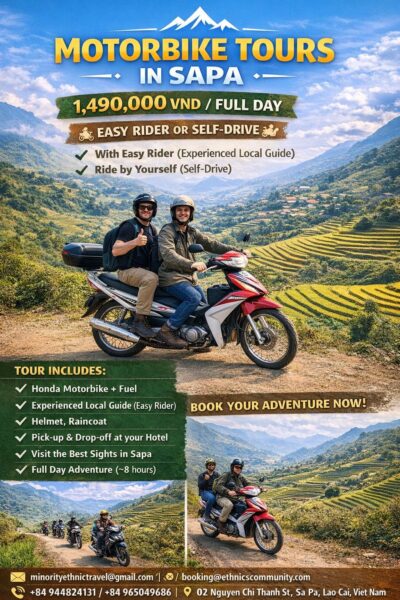
Sapa Motorbike Tours
-
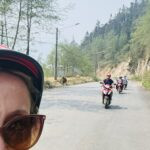
- Riding Scooters in the Mountains
-
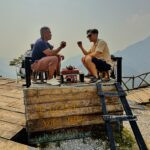
- Tea at the Top of the World
-

- The Lonely Tree, Sa Pa
-
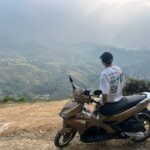
- My Nephew Contemplating Life
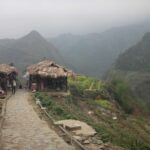
Conquer Fansipan — the Roof of Indochina
At 3,143 meters (10,312 feet), Fansipan is the highest mountain in Vietnam—and thankfully, you don’t have to hike to the top to say you’ve conquered it. The easy (and spectacular) route starts in central Sa Pa, where you can take the Muong Hoa funicular from Sun Plaza to the Fansipan cable-car station, followed by a roughly 15-minute cable-car ridesoaring over the Hoàng Liên Sơn mountains. From the upper station, you can climb the final several hundred steps past temples and giant Buddha statues to the summit, or save your legs and take another short funicular most of the way up.
If you want to earn that summit the hard way, Fansipan can also be climbed on foot, typically as a challenging one- or two-day guided trek through Hoàng Liên National Park. Whichever way you get there, bring layers: the weather at the summit can be dramatically colder, windier, and foggier than it is in Sa Pa—and on a clear day, the views are incredible.
-
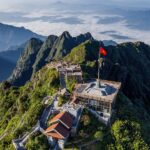
- Fansipan, the Roof of Indochina. Photo: Vivu Vietnam / Wikimedia Commons, CC BY-SA 4.0
-
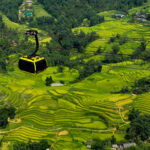
- Fansipan Cable Car over the rice terraces. Photo: Vivu Vietnam / Wikimedia Commons / CC BY-SA 4.0
Visit Cat Cat Village
We first visited Cat Cat in 2017, and the experience was very different from the one we had when we returned nine years later. We walked along stone paths through the mountains, passing rice terraces, small homes, livestock, and Hmong women selling handmade textiles and other goods.
Several Hmong women walked with us for part of the way, babies bundled onto their backs as they carried baskets filled with goods to sell. I started chatting with one of the women and, at some point, asked her what month it was. She didn’t know. She explained that she didn’t measure the passage of time by months on a calendar, but by the changing weather, growing seasons, and harvests. I found that fascinating—not because one way of keeping time is better than another, but because it was such a completely different way of experiencing something I had always thought of as universal.
And then there was the elderly, nearly toothless Hmong woman who apparently decided Vuong was quite a catch. She pinched him, leered at him mischievously, and shamelessly flirted with him. Some things, apparently, are universal. 😂
When we returned in 2026, Cat Cat was almost unrecognizable. The stone paths and spectacular mountain setting were still there, but the experience had become much more polished and commercialized, with elaborate photo installations, cafés, performances, traditional costume rentals, and even a brightly colored slide you ride down in an inner tube. Naturally, the boys dressed up in Hmong clothing for photos.
Is today’s Cat Cat touristy? Absolutely. Is it still worth visiting? I think so. The scenery is beautiful, it’s easily accessible from Sa Pa, and it provides an introduction to Hmong culture—just understand that you’re visiting a developed cultural tourism attraction, not an isolated village untouched by tourism.
-

- Renting traditional Hmong clothing is a popular thing to do in Cat Cat Village, Sa Pa
-

- Photo Ops with Horses
-
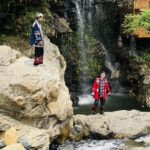
- And By/In The River
-
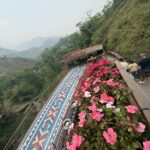
- The Crazy Kooky Slide
-
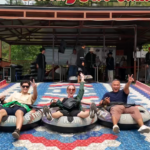
- Giant slide near Sa Pa
-

- The Lady Who Molested my Husband
-

- Hmong ladies selling their wares, Sa Pa
Take in the Scenery
Sometimes the best thing to do in Sa Pa is simply look around. The town is surrounded by some of the most dramatic scenery in Vietnam—layer upon layer of mountains, plunging valleys, waterfalls, and impossibly sculpted rice terraces that change color with the seasons. You don’t have to commit to a serious trek to enjoy it, either.
Scenic drives and short walks around Muong Hoa Valley and Ô Quy Hồ Pass offer plenty of opportunities to stop, wander, and take photos. And don’t be discouraged if the mountains disappear into the clouds for a while; mist is practically part of Sa Pa’s personality. When it lifts and suddenly reveals the terraces and mountains that were hiding behind it, the scenery somehow feels even more spectacular.
Try Horse Meat
Thắng cố is one of Sa Pa’s more adventurous traditional foods—a Hmong stew traditionally made with horse meat, bones and offal, slow-cooked with aromatic mountain herbs and spices. Modern versions may substitute beef, buffalo or pork, so ask what’s in the pot if you’re specifically looking for—or specifically hoping to avoid—the traditional horse version.
Test Your Nerve at the Dragon Cloud Glass Bridge
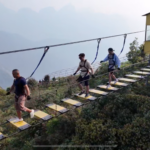
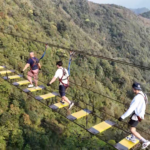
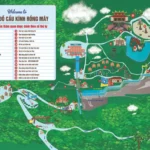
About 11 miles from Sa Pa, high on Ô Quy Hồ Pass, Rong May (Dragon Cloud) Glass Bridge is part scenic viewpoint, part adventure park, and completely ridiculous if you’re afraid of heights. 😂 The adventure starts with a tunnel through the mountain followed by a glass elevator climbing roughly 1,000 feet up the cliff, before you step onto a transparent walkway suspended over the valley. Beyond the bridge, you can pay extra for activities including a zipline, extreme swing, sky bike, and additional suspended walkways. Current 2026 admission is about $19–20 per adult for the bridge and elevator, with most adventure activities around $6 each. (Trang Đặt Vé Cầu Kính Rồng Mây)
The easiest way to visit is by taxi or private driver from Sa Pa, about 30–45 minutes each way; I’d arrange for your driver to wait rather than count on finding a ride back from the mountain. Allow around 2–3 hours at the complex, longer if you’re doing several activities.
The BEST way to visit is the way we did it…take a scooter tour that includes this as part of your adventure. We were a little rushed because we took way too long at Cat Cat Village, but a few us got really crazy and did the suspended walkways. I did not… I am a bit of a thrill-seeker, but I really don’t like suspension bridges. In Ecuador, we jumped off of one, and the scariest part for me was not the jump, it was the bridge!
*Jennifer’s Tip*: This attraction is all about the views, so check the weather before you go—Sa Pa fog can leave you staring through an expensive glass floor at absolutely nothing. Go early on a clear morning, wear shoes with good grip because the glass can get slippery when wet, and bring a jacket; it’s considerably cooler and windier up there. Tickets can be purchased on arrival or in advance through the official Rong May ticket site. (Sapa Nomad)
-

- Dragon Bridge
-
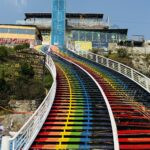
- Rainbow Stairs at Dragon Bridge
-
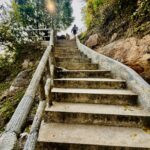
- Stairs at Dragon Bridge
-
- Another example of adventure you can seek out in Sa Pa
-
- Map of Area
What to Eat in Sa Pa
The food in Sa Pa is a little different from what you might expect elsewhere in Vietnam. This is mountain country, so the food tends to be hearty, smoky and warming, with plenty of grilled meats, sticky rice, local herbs and hotpots. Here are a few specialties to look for:
Thắng Cố: Let’s start with the adventurous one. Traditional thắng cố is a Hmong stew made with horse meat, bones and offal, slowly cooked with mountain herbs and spices. You may also find versions made with beef, buffalo or pork. I didn’t get a chance to try thắng cố while we were in Sa Pa, and I totally regret it. Traditional versions are described as rich, fatty, gamey and intensely savory, with horse meat and offal simmered in a fragrant broth of mountain herbs and spices. It may not be everyone’s idea of comfort food, but it’s one of the most distinctive dishes of Vietnam’s northern highlands—and next time, I’m trying it.
Sa Pa Salmon and Sturgeon: One of the more unexpected specialties of Sa Pa is salmon and sturgeon, which thrive in the cold mountain waters around the region. You’ll find them prepared in all sorts of ways, including hotpot, grilled, and served raw sashimi-style. On our most recent visit, we ate at Red Dzao House, where we tried both salmon and sturgeon grilled and sashimi-style. The sashimi may seem like an odd thing to order in the mountains of northern Vietnam, but when the fish is raised right there, why not? We loved getting to compare the two fish prepared different ways.
Bánh Xèo: Bánh xèo is Vietnam’s wonderfully crispy savory pancake, made from a rice-flour batter often tinted yellow with turmeric and filled with ingredients such as pork, shrimp, bean sprouts, and green onions. It’s typically torn into pieces, wrapped in fresh herbs and greens, and dipped in sauce.
While southern Vietnamese bánh xèo tends to be larger, thinner, and packed with shrimp and pork, the versions you find around Sa Pa and northern Vietnam are often smaller, thicker, and heartier, with fillings that may lean toward pork, mushrooms, or local vegetables rather than seafood. Like many Vietnamese dishes, bánh xèo varies considerably by region—and Sa Pa’s cooler mountain setting makes its hot, crispy version particularly satisfying. I discovered it here, and it became one of my favorite dishes! I had it for breakfast every morning at Victoria Sa Pa Resort!
Cơm Lam: Sticky rice is packed into bamboo tubes and cooked over hot coals, giving it a subtle smoky flavor. Although cơm lam is a specialty of Vietnam’s mountainous regions, versions of bamboo sticky rice are found throughout Southeast Asia. We actually first tried it in Cambodia, bought from a roadside vendor while driving from Phnom Penh to Siem Reap. It’s simple, portable, and surprisingly addictive.
Lợn Cắp Nách: Literally nicknamed “stolen armpit pig,” these small mountain pigs traditionally got their name because they could be carried under one arm to market, or easily stolen by grabbing the little piggy and carrying it in your armpit. Not a very appetizing name, IMO! 😂 The pork is usually roasted or grilled until the skin is crispy.
Gà Đen: Black Hmong chicken is a local breed with dark skin, meat and bones. It’s usually grilled, roasted or cooked with mountain herbs. I found the chicken a little tough, but some people actually prefer it that way- more texture.
Trâu Gác Bếp: Buffalo meat seasoned and slowly smoked over a wood fire. Think of it as a smoky, intensely flavored highland version of jerky. We tried this, as well as horse jerky, at the dragon bridge while we waited for the boys to finish their suspension bridge walk. It tasted like… beef jerky.
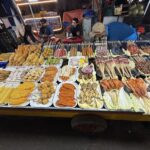
Grilled Street Food: On elf our favorite pastimes when traveling, especially in Asia, is to wander the night markets. In the evening, stroll downtown Sa Pa and look for markets filled with stalls grilling skewers of meat, vegetables, mushrooms, corn and other snacks over charcoal. When the temperature drops after sunset, wandering around Sa Pa eating hot food straight from the grill is pretty hard to beat.
*Jennifer’s Tip*: Don’t spend your entire visit eating pho and bánh mì just because you recognize them. Sa Pa is a great place to try the foods of Vietnam’s northern highlands—even if you decide the horse-and-offal stew is one experience you’re happy to skip. 😂
-

- Bánh Tráng Nướng — Vietnamese Pizza
-
- At the Night Market
-

- Yummy Lunch Spot in Sa Pa
-
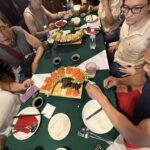
- Our Spread
-

- Banh Xeo, Sa Pa Style
-
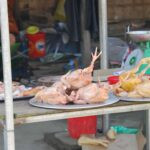
- Chicken Being Prepared
-
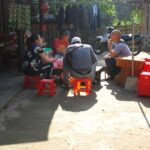
- Vuong Snacking with the Locals
How to Get Around in Sa Pa
If you’re staying near city center, you’ll be able to walk to many of the sites in town. When you are ready to venture out, grab, taxis, and private drivers are your best bets.
Grab: Grab was our go-to for getting around Sa Pa. Both Grab cars and GrabBike motorbike taxis are available, and using the app eliminates the need to negotiate fares or explain your destination. Grab works best in and around the town center; availability can be more limited once you head farther into the mountains or villages.
Taxis: Regular taxis are readily available, and your hotel can call one if you can’t find a Grab. Xanh SM, Vietnam’s electric taxi service, also operates in Sa Pa and can be booked through its app.
Motorbikes: You can rent a motorbike or use a motorbike taxi (xe ôm) to explore independently. The roads outside Sa Pa are gorgeous but steep, winding and sometimes foggy or wet, so I wouldn’t make this the place to learn how to ride. If you are comfortable driving yourself, go for it! This would be an inexpensive, reliable way to get around and would give you ultimate flexibility. Once you get out of town, traffic is not an issue.
Private Driver: For places farther outside town—like Ô Quy Hồ Pass, waterfalls, villages or the Rong May Glass Bridge—hiring a driver for several hours or the day can be easier than relying on finding a Grab for the return trip. Better yet, do a scooter tour like we did for the best of both worlds!
*Jennifer’s Tip*: Don’t assume you’ll be able to get a Grab back from every remote attraction just because you were able to get one there. For anything well outside town, arrange a return ride with your driver or ask your hotel to organize transportation.
How Many Days do you Need in Sa Pa?
It takes a good bit of effort to get here and there’s a lot to do and see… why not stay a while?
You can see the highlights of Sa Pa in two nights, but I’d recommend at least three nights if your itinerary allows—and longer if you have the time. Three nights gives you enough time for Fansipan, Cat Cat Village, a trek or scenic drive through the rice terraces, and some of the attractions farther outside town without cramming everything into one day.
It also gives you a little insurance against Sa Pa’s famously unpredictable weather. Mountains that are completely hidden by fog one afternoon may be spectacularly clear the next morning.
As always, I’m firmly in the stay as long as you can camp. I’d rather spend an extra day wandering, eating, getting a massage, or doing absolutely nothing with a mountain view than race through a destination just to check another place off a list. Three nights is ideal for most first-time visitors, but four or five certainly wouldn’t be too many if you enjoy mountains, hiking, photography, or slower travel.
Where to go Next
Hanoi: If you haven’t been or want to go back… Hanoi is the easiest place to continue after Sa Pa. The simplest option is a direct bus or limousine van, which generally takes about 5–6 hours. You can also retrace (if you took the train in) the classic overnight-train route: drive about an hour from Sa Pa to Lào Cai and take the overnight train to Hanoi. See above for how to book the train. Here’s my Hanoi Travel Guide.
Ninh Binh: You don’t have to return to Hanoi first. Direct sleeper and cabin buses run from Sa Pa to Ninh Binh, generally taking around 8–9 hours, although some services take longer. If long bus rides aren’t your thing, you can travel to Hanoi first and continue to Ninh Binh from there.
Ha Long Bay: Direct buses and shared transfers connect Sa Pa with the Ha Long Bay area, but it’s a long travel day. Another option is to return to Hanoi and travel from there to your cruise port, which can make sense if you’re spending time in Hanoi anyway. If you’re booking an overnight cruise, check exactly where your cruise departs—Ha Long International Cruise Port and Tuan Chau aren’t the same pickup point, and some cruises now depart from other ports.
Jennifer’s Tip: If you’re combining Hanoi, Sa Pa, Ninh Binh and Ha Long Bay, think about the order before booking your hotels. You don’t necessarily have to keep returning to Hanoi between each stop, and a direct transfer can save you a surprising amount of backtracking.
What I’d Tell a Friend Going to Sa Pa
Seek out experiences, and don’t rush. Enjoy the adventurous, fun activities, but also take time to drink in the scenery and the culture. These are some of the most breathtaking vistas in the world—looking out over the soaring rice terraces feels surreal, almost as though you’re looking at a painting. See them in the morning and again in the evening; the changing light transforms everything.
Eat foods that are strange to you. Talk to people. Ask questions. Learn how they live and how they see the world. Be curious. Be open. Soak up as much as you can. The best souvenirs are the things you didn’t know before you came.
So, until next time, Sa Pa. We’ve already come back once—and I have a feeling we’re not finished with you yet… especially since we still haven’t tried Thắng Cố!
Next up: Ninh Binh—where we’ll float between towering limestone cliffs, climb way too many stairs for an incredible view, and discover yet another reason I can’t seem to stop going back to Vietnam. See you there!

0 Comments